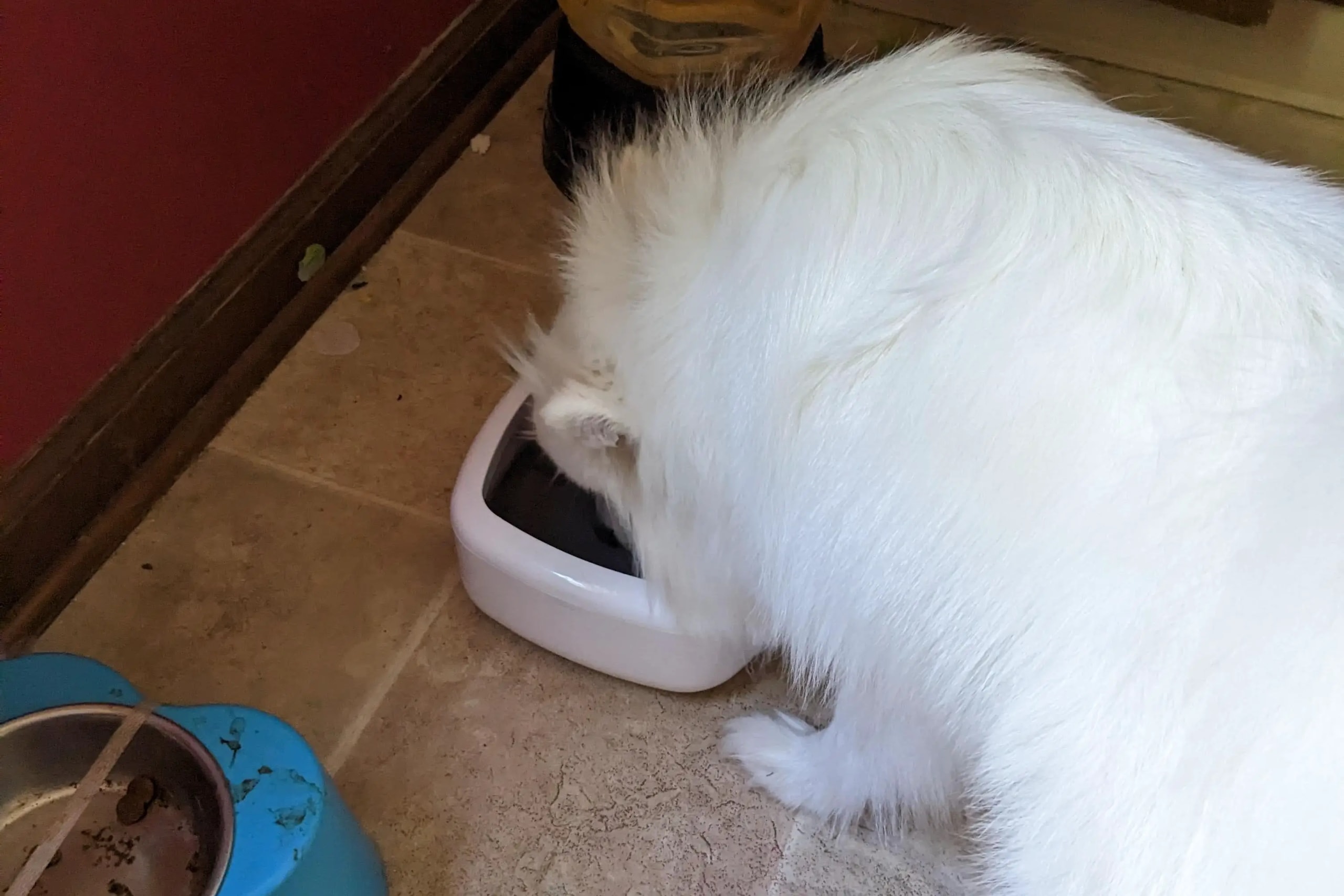
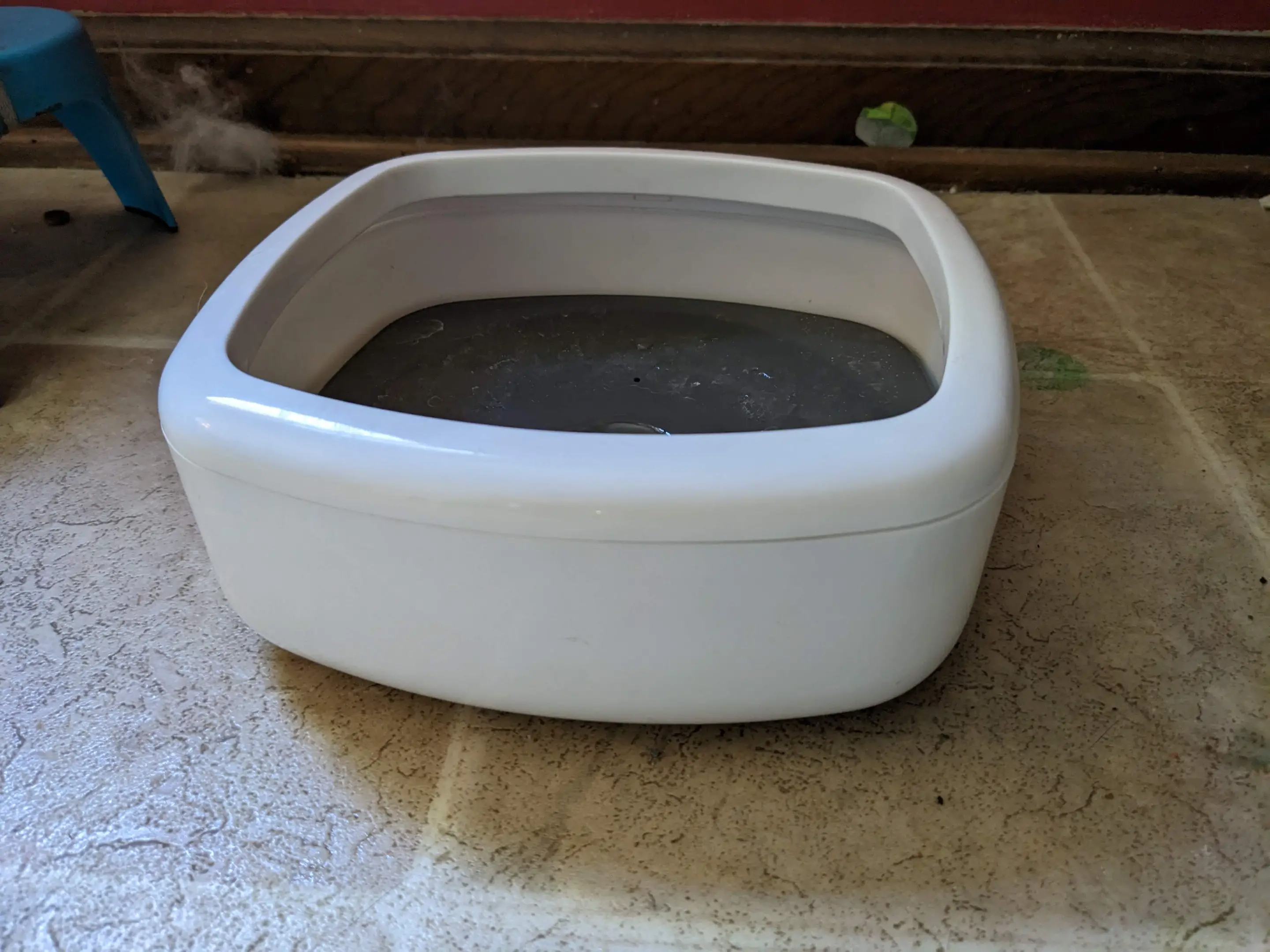
I've been using this dog water bowl for a couple of weeks now, and let me tell you, it's a standout. The biggest wins? It's toddler-proof, and my dog prefers it over his old bowl!
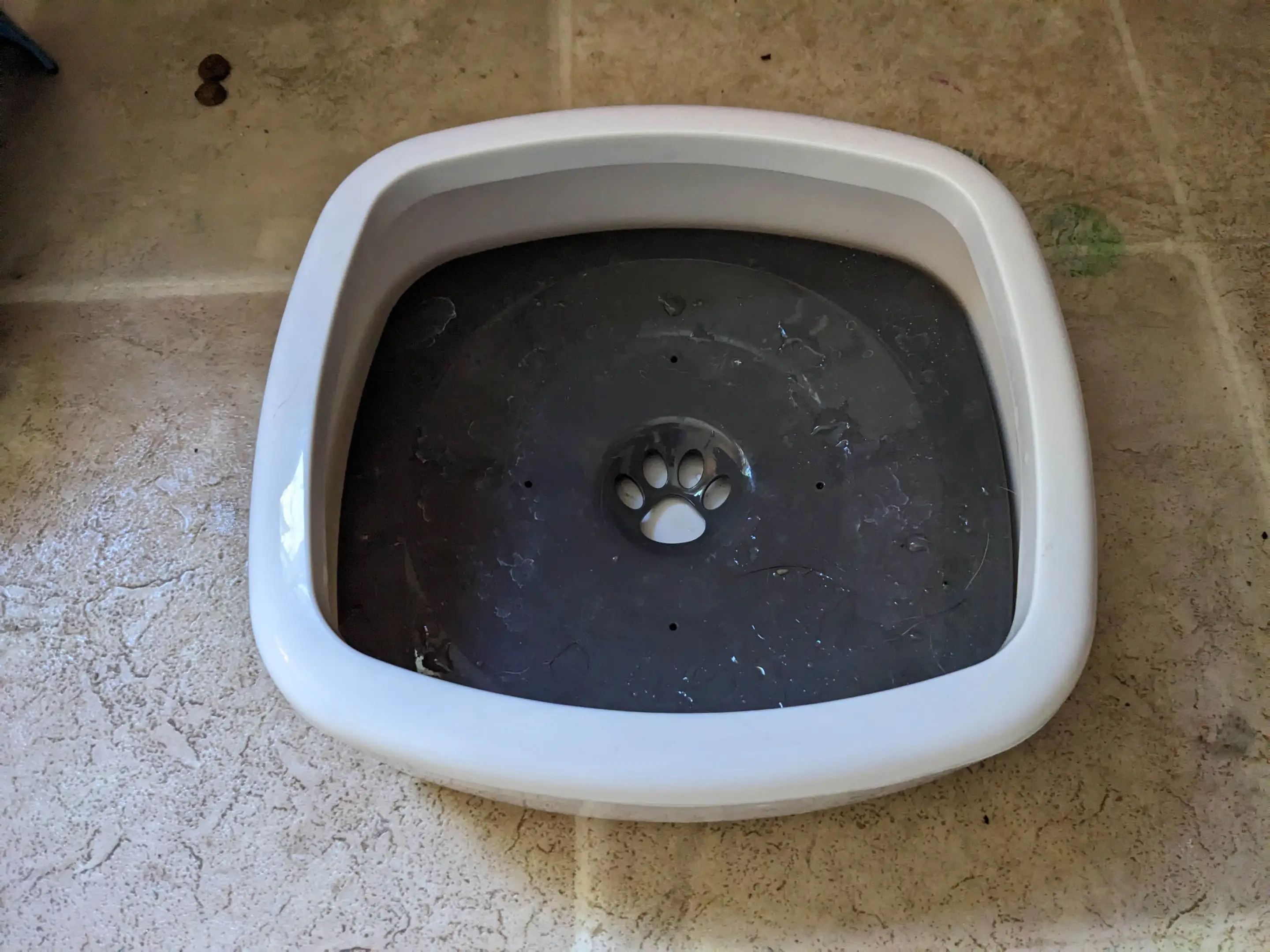
What makes this bowl special is the floating disc feature. It slows down my dog’s water drinking, keeping his chin dry and preventing choking. Plus, it keeps the water clean. It’s a simple but genius feature, and my dog loves it!
Dog Bowl Water Filtration Feature
Then there’s the water filtration feature. This comes in handy when you’re outdoors, ensuring your dog gets only clean, purified water. It’s a great peace-of-mind factor, especially when traveling.
As a parent, the best part for me is that my almost two-year-old can’t get into the water. I’ve seen a lot of water bowls, but none that can boast being child-proof. With this one, I don’t have to worry about my toddler making a mess.
And it’s not just toddler-proof, but also dog-approved. Despite having his old water bowl filled, my dog consistently chooses this new one. It’s been amusing to watch his old bowl gather dust.
It’s easy to clean and travel-friendly. This 34oz bowl hits the sweet spot for my dog’s hydration needs, and it’s lightweight enough to tote around.
List of the Floating Disk and Slow Drink Water Bowl Features
So, if you’re looking for a dog water bowl that’s practical, clean, and child-proof, I can’t recommend this one enough. It’s truly a game-changer.
Enhanced Hydration: The automatic floating disc design slows down the speed of your pet’s water consumption. This not only prevents suffocation but also maintains cleanliness, keeping your dog’s mouth and chin dry.
Superior Water Filtration: The built-in filter ensures that your pet always has access to clean and purified water, which is particularly beneficial during outdoor trips. It prevents sickness by removing impurities, ensuring your dog’s well-being.
No-Spill, No-Slip Design: With its fixed frame and unique border design, this water bowl provides an anti-spill solution. The no-mess design, coupled with non-slip pads, prevents water from splashing on your floors, even in a moving car.
Easy Maintenance: Cleaning the bowl is straightforward and stress-free, thanks to the provided disassembly tools. Its parts can be easily taken apart, ensuring that every nook and cranny is thoroughly cleaned.
Portable and Convenient: The moderate 34oz capacity is perfect for meeting your dog’s hydration needs. It is lightweight, making it easy to carry around, especially during travel.
Dog-Friendly and Attractive: From personal experience, my dog showed a clear preference for this bowl over his old one, a testament to its pet-friendly design. The design is also aesthetically pleasing, adding a cute touch to any space.
Child-Proof: Designed to keep my curious two-year-old child from messing with it, this bowl does its job efficiently. It’s a relief knowing I don’t have to constantly supervise my toddler around the dog’s water bowl.
Durability: Despite my dog stepping on it, the bowl showed great resistance and durability without spilling much water.
Are slow water bowls good for dogs?
Absolutely! Slow drink dog water bowls, like the one I’ve reviewed here, are an excellent choice for your four-legged friends. They control the drinking speed and prevent quick gulping, reducing the chances of choking, and spills.
How can I get my dog to drink water slowly?
The slow drink dog water bowl I’ve been using comes with a floating disk. This nifty feature slows down your pup’s water intake. It’s straightforward and doesn’t require any extra training or control.
Is there a bowl that stops dogs from drinking too fast?
Yes, there are special bowls designed to slow down your dog’s drinking speed. This particular water bowl I’ve reviewed, with its floating disk, does an excellent job of slowing down drinking and keeping everything neat and clean.
Can you use a slow feed bowl for water?
Generally, slow feed bowls are designed for food, but the slow drink dog water bowl is designed specifically to slow down water intake. It’s a spill-proof, stainless steel bowl that’s perfect for both water and dog food.
How can I get my dog to drink water slower?
The floating disk in this water bowl reduces your dog’s drinking speed. This not only ensures a spill-free drinking experience but also ensures your dog takes in water at a healthy pace, preventing choking.
Can a slow feeder bowl be used for water?
This dog water bowl is designed with water in mind. Keep in mind there are also other options for food.
It slows down drinking speed and minimizes spillage, making it a great choice for both food and water.
Do slow bowl feeders work?
Yes, they do! In fact, they’re beneficial for most dogs, from large dogs to smaller dogs. They help control food and water intake speed, reducing risks associated with fast consumption like choking or vomiting.
How do I stop my dog from drinking too fast?
With a slow drink dog water bowl, you don’t need any special training or techniques. Its design naturally slows down your dog’s drinking speed.
What if my dog drinks water too fast and throws up?
This is a common concern among dog owners. Many dogs can be water gulpers, drinking too fast and sometimes leading to vomiting. This bowl, with its floating disk, reduces drinking speed, which can help prevent such issues.
Value for the Money of this Slow Water Bowl?
Given all these features and benefits, the product is definitely worth its price and is a smart investment for any pet owner.
In summary, this bowl offers a blend of utility, convenience, and design that both you and your pet would appreciate. It’s more than just a water bowl; it’s an investment in your pet’s health and happiness.
Sterilization is a surgical procedure performed on female cats. As with any such procedure, it is necessary to follow certain recommendations in order to ensure your pet’s good health. If you have no idea how to take care of a sterilized cat, the following tips will help you get through it.
Preparing for the Post-Operative Period
Sterilization requires general anesthesia for your cat. You will not go home until the effects of the anesthesia have dissipated, which implies that the animal has woken up. Be prepared to give your cat the attention and tenderness it needs to recover quickly.
As a prelude to the sterilized cat food, make sure he doesn’t move around too much during the first few days. Follow your veterinarian’s recommendations carefully to ensure your pet’s recovery.
Opt for a Diet Adapted to your Pet’s New Condition
After sterilization, your cat will transform quite quickly which will have a considerable impact on its weight. In fact, sterilized cats are subject to an increase of about 20 to 25% in their appetite.
This situation creates a weight increase when their diet is not controlled. Your role will be to monitor your cat’s diet by feeding him foods that are less rich in calories.
It is generally recommended to opt for sterilized cat food recipes. In addition, your help will help him control his appetite.
During the so-called critical period (18 weeks after sterilization), it is essential that you pay special attention to your companion.
It is indeed during this time that the cat gains weight and it is possible to not notice it if you are not attentive. You must therefore control your pet’s food intake as soon as he returns home. This will allow you to prevent weight gain. You can train him no to eat too much.
Keeping an Eye on your Cat’s Urinary Hygiene
It is very important to monitor the urinary hygiene of a sterilized cat even years after the procedure.
In fact, 90% of urinary stone problems are observed in sterilized cats. It is therefore important to keep an eye on your pet’s hygiene in order to prevent their appearance. To do so, adopt recipes for sterilized cat food for good urinary hygiene.
Correctly follow the recommendations of the veterinarian if your animal seems to recur or predispose to the appearance of stones. If you have a cat that drinks a lot, give him a sufficient quantity of water through freshly pouched or canned food.
Stimulate your Cat’s Physical Activity
A few days after sterilization, stimulate your pet’s physical activity. This is an essential point, because your cat’s level of activity must evolve according to his living condition.
Keep in mind that your cat’s needs will change after sterilization. If he used to bask in the sun and spend most of his time on the couch, he will no longer do so.
Even if you don’t spend your time cuddling and giving affection, spend 5 to 10 minutes playing with your cat. This will give him energy.
It is also a moment of pleasure between you and your companion. By stimulating his physical activity, you save your pet from bulimia and boredom.
Will my cat be in pain after the operation?
Normally not. Before returning your cat to you, your veterinarian will have injected anti-inflammatory or painkillers to avoid any pain.
You will not need to give any pills.
Depending on his needs, he may also give him antibiotics as a preventive measure to avoid any infection.
Can my cat eat tonight after her sterilization?
Yes, but not much.
Spaying a male cat is a very quick procedure, without entering the abdominal cavity. Your cat will be able to have a small light meal in the evening if he wishes.
On the other hand, spaying a female cat requires entering the abdominal cavity to remove the ovaries.
Because of this, the anesthesia takes a little longer and your cat may be tired and not want to eat for 24 hours.
This is normal, don’t force her, her appetite will return, don’t worry! However, leave some water available.
Can my cat go out after her sterilization?
If possible, avoid going outside for 2 to 3 days.
That evening, your cat may be a little “out of it” due to the effect of the anesthesia, so if it climbs on a piece of furniture, it may fall.
He won’t have all his reflexes either: face to face with another very “territorial” cat it might be difficult for him.
The anaesthetic is eliminated from the body only after a few hours, slows down certain reflexes such as the one to close the pupil in front of the light, your cat can thus be very disturbed by the light or violent noises.
The ideal is to set up a small corner in a dark, quiet room (without noises) by placing a pleasant blanket on the floor, so that it is warm and does not risk falling.
Finally, during 24 to 48 hours the outside environment can stain the unsutured wounds of male cats or the bandage of females.
Like dogs, cats are household pets most homeowners choose to have. They’re cute, cuddly and active domestic animals who enjoy your attention as much as you enjoy their company. However, like any other pet, cats have animal instincts that can get frustrating whenever not cared for. Scratching is a common issue among cats. Fortunately, having a scratching post can solve your dilemma.
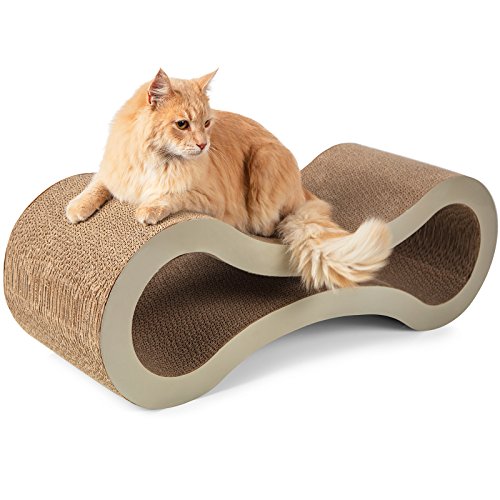
The Paws & Pals Cat Scratcher Lounge Post is said to be unique cat furniture for your feline. Aside from providing your cat its own place to stretch its claws, this product further provides an enjoyable lounging space for them to relax on. Let us take a look at what this product is all about and determine whether it is a great value for money or not.
Paws & Pals Cat Scratcher Lounge Post
This cat lounger comes in blue, beige, and grey—neutral colors that can easily complement your home’s décor.
DIMENSIONS: 32 L x 10.5 W x 10.5 H inches – 76 Oz. – Purrfect for Cats of All Sizes – Reversible, Double Sided and Features a High-Quality Corrugated Superior Cardboard Construction for Increased Longevity.
HAPPY CAT: Cat Scratcher Post Lounger Promotes Healthy Claws through Natural Scratching and Allows your Little Climber to Play, Lounge, Nap and More – Great Source of Exercise and a Truly Terrific Stress Reliever – Includes Catnip for Cats.
CURVACEOUS DESIGN: Interactive and Guaranteed to Attract your Kitty – Allows for an Easier Scratching Experience and a Multitude of Comfortable Resting Positions. Not Only Will Your Cat Enjoy Laying on the Top, But they Will Absolutely Love to Play on the Inside, as it Keeps Them Hidden and Snug.
ECO-FRIENDLY: Unlike Other Scratchers, our Award Winning Newly Redesigned 2019 Edition Sturdy Cat Scratching Post is made from 100% Recycled Cardboard, and is Best For Preventing your Cats from Scratching and Ripping Furniture.
VARIETY: Choose Between Three (3) Different Colors to Please even the Pickiest of Felines and Owners. Available in Charcoal, Light Blue, and Beige.
The Paws & Pals Cat Scratcher Lounge Post with Catnip is the perfect way to divert your cat’s attention away from your furniture and keeping them free of scratches. This cat scratcher offers a lot of advantages for you and your feline, such as:
It keeps your cat entertained.
The most common reason why owners get a cat scratcher for their pet is to prevent them from damaging furniture because of scratching. With this particular cat post, your cat can scratch away and get preoccupied for hours with the feel of the cardboard on their claws and paws.
Helps promote health
There are many reasons why cats love scratching: to mark their territory visually and through scent, sharpen their claws and to exercise their legs and claws. By providing a place for your cat to scratch naturally, you also keep them healthy.
Comfortable lounging area
Since cats love to lounge where they feel comfortable, this cat scratcher will surely attract your pet with its curved design that perfectly fits underneath the body. It also has holes in between that are substantial enough for a cat to fit inside if it chooses to relax or be concealed.
Innovative
The curved design is not just for aesthetics but also for easier scratching. Your cat can play, scratch as well as rest in different positions. It is also reversible; so if the top has too many scratches already, you can just flip it over, and your cat can start again with a new scratching surface.
Eco-friendly
They make this cat scratcher from recycled material which is great because you also help lessen the waste in the environment.
Attracts and calms cats
The Paws & Pals Cat Scratcher Lounge Post is infused with catnip which is a perennial herb that can cause a state of calm or euphoria for your cat. Most cats love the smell of catnip which is why many cat owners use this as a treat for their pet.
Cons
Some minor drawbacks to this product are:
Expensive
For some, it may be expensive since the material used consists of recycled cardboard. However, if you check out the dimensions, the cat scratcher is big, and they guarantee it to be sturdy.
It is quite messy and unattractive when used.
When your cat scratches on the material, tiny bits of the cardboard can fall off the lounge post and accumulate on the floor. It can be a mess if you have two or more cats using the scratcher, the debris is trivial contrasted to getting your furniture ruined by your pets. It’s also a given that scratches can affect the overall look of the lounge post.
Paws Pals Cat Scratcher Lounge Post with Catnip Summary
The Paws & Pals Cat Scratcher Lounge Post with Catnip offers many features that are beneficial for your cat and with the added bonus of protecting your furniture from damage. With this 2-in-1 scratch post, you don’t have to worry about setting up a separate area where your pet can play and another one for resting.
Cozy and Satisfying
It provides a comfortable lounging area with its curved design and also allows better scratching experience for your cat. Since it has an open area in the middle, cats are stimulated to be curious or play with other cats.
Added Value
With that said, you would expect that the price is more expensive than other cat scratchers. What adds more to the value happens to be the material that has been used. Nevertheless, your cat can also use it for a long time since it is reversible. Such a feature also allows you to use the other side if the scratches become too much of a mess to look at.
Keeping your cat preoccupied with this cat scratcher will minimize your pet’s inclination to scratch other objects like your furniture. It’s also a great tool to keep pets healthy; allowing them to scratch naturally to relieve stress and to exercise.
Comparison With Another Unique Cat Scratcher
The PetFusion Ultimate Cat Scratcher Lounge is a similar product that you can compare with the Paws & Pals Cat Scratcher Lounge Post. This cat scratcher is also eco-friendly as they make it from recycled, corrugated cardboard. It also uses non-toxic cornstarch to glue everything together plus a siding made of premium satin cardboard.
They also design it with a curved top and bottom where your cat can lie down and relax. And is an excellent way to keep your pet cool during hot days as air can go through the cardboard material.
Additionally, it has catnip leaves in it to encourage your cat to use it. It also fits more than one cat and has a reversible design just like the Paws & Pals Cat Scratcher Lounge Post. However, the holes are quite smaller than the ones from Paws & Pals, and this product is also a bit more expensive.
Verdict
The Paws & Pals Cat Scratcher Lounge Post with Catnip is a great tool to train your cat to use a scratcher. It’s comfortable to lounge on and is also quite engaging for curious cats. Although it can get messy when your cat scratches on the cardboard, it’s easy to clean up or vacuum.
It’s well-designed, hard-wearing and ECO-friendly; you will love this cat scratcher as much as your cat will love it.
It is true that cats can instantly adapt to living indoors and they acclimatize exceptionally well.
However, as familiarized as they are with their indoor territory, they still need to convey their need to give in to their natural feline demeanour. That urge of going out where they can scratch, climb and explore the realm that is outside the private nooks of indoors.
Pet doors for sliding glass doors can easily be installed without tools or cutting. There are three options for you to choose from:
Thermo Panel 3e by Endura Flap– fully automatic works with pet’s micro-chip. Fits almost all track heights, spring-loaded.
It would be inconvenient for a cat owner to have to slide open and close the door every single time pets have these outdoor urges.
But, you don’t have to be anymore. Not with the cat door for your sliders.
Cat Doors for Sliding Doors
PetDoors have had over 500,000 happy customers since 1976 for their different products that are particularly focused on giving your pets access to both indoors and outdoors.
They have a line of pet door designs that are particularly designed for sliding glass doors.
These do not require you to cut through your existing glass door if it is your first time to install one.
Rather, you can simply fit it in with just a few modifications. We’ve checked out a few pet doors that can be helpful for you, your feline, and your sliders.
Freedom® Aluminum Patio Panel by Petsafe – Cat Door for Sliding Patio Doors
Utilizing your sliding door as an access way for your pets is easy with the Freedom® Aluminum Patio Panel by Petsafe.
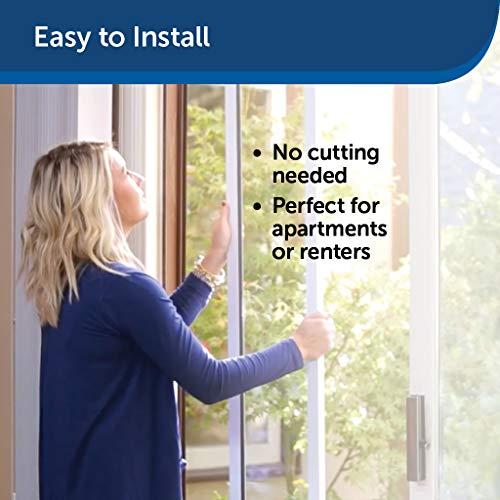
It doesn’t leave you confused with complicated instructions. No drilling. No sawing.
This door panel for your cat comes in different sizes. Your convenience starts by picking the right pet door with the correct height measurement of your sliding door, height and width of your pet, and your color preference.
Freedom® Aluminum Patio Panel by Petsafe comes in different sizes so you can choose from 81 to 96 inches.
Petsafe has designed their panels with different sizes according to your pet’s size, for your selection – from the smallest at 5 x 8 inches to the largest at 14 x 24 inches.
It is perfect for homeowners and renters as you can just slide them in or detach them fairly easily.
Worried about the hot or cold weather outside? Petsafe incorporated it with tinted and flexible flaps that have magnetic closure to resist weather from altering the interior conditions.
Freedom® Aluminum Patio Panel consumed aluminum to create a high-quality frame. It makes this cat door durable while being lightweight.
The design and construction allow for a better hold on the door. It is rustproof and there will be no need to replace the door for quite a long time
Features
Quick Installation – You can DIY without cutting into walls or doors. Adjustable from 75 7/8 inches to 80 11/16 inches to suit into your door frame
Different Sizes and Colors – You can choose from satin, white, and bronze that blend really well with your sliding glass doors
Strong and Durable – They are designed and manufactured to withstand heavy use, the door is built with weather-resistant aluminum and shatter-resistant tempered glass
Controlled Access – The slide-in closing panel lets you securely control your mouser’s access to the outdoors.
Pros
Easy to install and setup. Perfect cat door for renters
Is provided with a weather-resistant panel and stripping
Manufactured with superior and high-grade aluminum and shatterproof glass
Comes with energy-saving ultra-seal
Available in different sizes and colors
Cons
May take up a huge chunk of your sliding door space
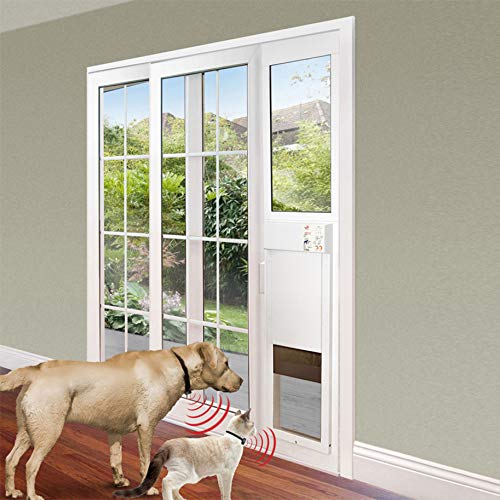
If you are a fur parent who worries about unwanted animal friends coming over for a visit, Patio Pet Door by High Tech Pet is your best choice. This pet door is sensor-triggered and only opens from the prompt set off by the pet’s battery-operated collar.
Patio Pet Door by High Tech Pet does not just open at the nearness of the pet from the door, like most doors at the mall do.
The directional process is activated only when your pet is directly approaching the door, not when it is sitting or nosing around nearby.
A secure pet door it is designed to be, it is constructed with weather-proof construction with automatic settings to keep unwanted costs of using a pet door.
It is mounted in an energy-efficient dual-pane, low-E glass panel that easily fits into an existing sliding glass door.
The self-contained pet door adjusts to your slider’s individual height with the help of a special spring-loaded top section for that quick and easy installation.
Your slider glides shut against the pet door’s insert and may be locked with its incorporated Universal Quick-lock that is designed to work with almost any sliding glass door.
The whole panel is constructed with a steel deadbolt lock and bulletproof door panel that, when triggered by your pet’s collar, instantly and discreetly disappears into a sophisticated housing.
Features
Full Power, Motorized Operation – Keeps stray animals away while giving your pets the freedom to come and go without making you a doorman.
Installs Right Alongside Your Existing Sliding Glass Door – Installs in no more than 30 minutes without cutting or drilling.
Double Pane Energy Efficient Glass for Extreme Climates – Full weather stripping is included. No heat or coldness from the outside comes in.
Pros
Fully automatic with collars for pets that are safe to use
It started out from the frustration of not finding the good flap on a pet door.
In Endura Flap founders’ opinion, those in the market were either too rigid or not safe enough. They could be flexible but it didn’t give the right insulation.
After many hours of engineering and testing, they finally perfected the safe flap in 2005 – the birth of Endura Flap® design.
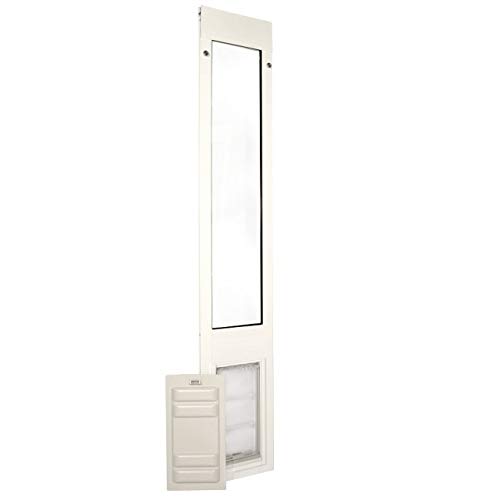
A perfect option for adding a secure way of permitting your cats in and out, Thermo Panel 3e has a four-lock system that retains it firmly in place and keeps the door locked until triggered.
Same as Patio Pet Door by High Tech Pet, Thermo Panel 3e by Endura Flap, the door lock is triggered by your pet’s embedded microchip, reducing the need for an external remote tag that could either be lost or damaged.
With its high-quality construction and sturdy materials, Thermo Panel 3e by Endura Flap can keep both large and small unwelcome animals out.
It is energy efficient with its dual-pane LoE glass and Endura Flap Pet door built into a tough aluminum frame.
Installation does not require tools. Its 3 inches spring-loaded height adjustment allows for easy setup and removal.
The single dual-layered flap is semi-transparent and it seals in contrast to the weather using a patented system of magnets.
Features
Easy Installation – No tools required. Just slide into aluminum sliding glass doors with its U-shaped tracks at least 1 inch thick.
Weather Resistant – Flaps are dual-layered with translucent sealings against the outside weather.
Different Sizes and Colors – 74 ¾ inches to 93 ¼ inches / White, Dark Bronze, Brushed aluminum
Pros
Fits almost all track heights
The spring-loaded design ensures a simple installation and is removable
Microchip sensing technology that is perfect for pets that refuse to wear collars
Cons
Microchip positioned too low, cats will have to crouch down
Lack of weatherproofing around the hard plastic door
Can You Install Cat Door in A Sliding Glass Door?
Yes. Patio panel pet doors, as what they are commonly known are pet doors for sliding glass doors. They are a simple yet effective solution for giving your cats and other pets easy access in and out of the house.
Setting up of cat doors for sliding glass doors aren’t complication since they can go with the existing track on your sliders.
Most patio panel pet doors can be installed without having to drill into your door or wall.
As much as it sounds like you have to replace your existing sliding door, you don’t. These can be easily fitted into your sliding glass doors with just minor modifications.
Here are the basic steps to follow in installing a pet door into alongside your existing sliding doors.
Step 1. Check Your Door’s Design
Examine your sliding door and gauge its track. Check whether your sliding door’s track is a monorail or not.
Installing a pet door on a sliding door that is not on the monorail is easier since the panels can be adjusted easily. But, if it is monorail, you can get monorail adaptors available at most DIY stores.
Once you insert the panel, it forms a partition that partitions the whole door into two parts – one being the immobile panel with the pet door and the other being the established panel of your door.
Step 2. Consider and Take Your Pet’s Measurement
The flap size should be according to the size of your pet so it is important you take measurements first. Otherwise, the pet door may be too big or too small for your pet and may just cause injuries.
To measure your furball, take the extents of the widest part of the cat’s body and add approximately 2 inches to it.
For the length, take the measurement by gauging from its shoulder to its feet and add about 1 inch to it.
Measuring your pet correctly will guarantee that the flap is just of the right size for the pet, enough for them to comfortably pass through every single time.
This also keeps larger animals from entering your house from the outside through your flaps.
Step 3. Positioning the Flap on The Door
Before installing the flap on the door, try cutting a piece of cardboard to test. This should give you an idea of where to perfectly position the flap in the sliding door.
Place the flap in a corner so as to not disrupt the functioning of the sliders. Corners are also convenient and ideal for pets to pass through.
This is because after installing an extra panel for the pet door, the area of your sliding door will decrease.
Measure both door and panel as the size of the panel will incorporate the width of the flap you will add.
Once you are finished taking the measurements, you will be able to determine the perfect pet door that’s just enough to for your pets to pass through without taking too much space from your sliding door.
Take note of the things you need to look for in a cat door;
Flap Size
Flap colour and shape
Security of access
Ease of installation
Durability
Step 5. Dry Fitting the Panel
Once you have the panel and the items you need to install them with, dry-fit to see if there are any alterations needed to be done.
Dry fitting should give you an idea of how your door will look like after any modifications.
Step 6. Fitting the Panel In
After dry fitting, the panel and once everything looks perfect, fit the panel in the sliding doors.
Place it in the bottom track and position it in the spot you think is the best for your fur babies. Tighten it by twisting the screws from the bottom to make it firm and stable.
There is a pressure system that works for sliding doors where towards the top end, it expands and fits in the height of the track. The panels can fit perfect even with this kind of system since you can just pop it in and out.
Step 7. Finalizing the Installation
Once the panels are stable and they are a snug fit into your sliding door track, the last thing you need to do is to install any insulation of weatherproofing devices that may come with the panel.
Manufacturers usually have the instructions listed on a user’s manual as it depends on each type and model.
How Much Does It Cost To Put A Cat Door?
The cost of pet doors varies upon the materials and how they are constructed.
A simple cat insert with plastic flap plays around $25 to $50, while that for a wooden door would be around $150. For sliders, electronic sliding pet doors range from $200 to $1000 depending on the size.
Installing the pet door in a sliding door should be pretty simple and can be done without any help. However, the level of difficulty also varies upon the location where it is to be installed.
It wouldn’t sound so bad to hire a professional if you are looking at putting it on an existing door, especially a sliding glass patio door, or if you need to cut through a wall.
Hiring a professional will cost you $125 to $300 on top of what you paid the pet door for. Some may charge either by the hour or per project. The fee may also increase if the handyman is the one providing the door.
Is There A Difference Between a Cat Door And A Dog Door?
It is easy to say that there is not much difference between a pet door for cats and dogs, after all, they are doors for pets. But, anatomically speaking there are slight variances between them.
For instance, cats have wider bodies that are relative to their height, thus they need wider and shorter doors. Dogs’ doors are typically taller and narrower.
Conclusion
Adding a cat into a household is a decision to be responsible for their needs. Such needs include having to breathe and do their own thing beyond the four corners of your house.
An expenditure of $500 may feel too much for a cat door. But, imagine what you will spend for the accidents in the house that includes scratching, barking, breaking things – all associated with a cat wanting to get out.
Adding a pet door in your existing sliding glass door is a brilliant option for giving your cat outdoor access.
Instead of being a gatekeeper, cutting or drilling a hole through your wall for a pet door, a patio panel allows them feline freedom to conveniently go in and out of the house without distressing you.
There are a lot of panels in the market that will work with your sliding glass door and they all typically follow the same installation process, with just a few differences.
All you need to do is pick the right size that is just right for you and your cat’s need.
If you happen to be a cat owner, then you would notice that your precious pet loves scratching stuff. Much to your horror, cats love to scratch the furniture!
This may seem like a big problem, but it can be easily resolved. The key is to learn how to train a cat to use a scratching post. There are many ways for you to deal with this problem.
First of all, it is important to understand why cats scratch their paws. Cats spread their scent by scratching their paws which means they are marking their territory.
It helps them to feel secure and to identify their enclave. Shedding claws is another reason for scratching. Scratching also helps them stretch their muscles.
On the other hand, you can trim your cat’s nails to help them ease the scratching. This method is not recommended as they lose their defense mechanism.
So can you train a cat to use a scratching post? We compiled some tips and tricks to follow to aid in your dilemma.
Useful Tips on How to Train a Cat to Use a Scratching Post
So, how do you how to get a cat to use scratch post?
Now that you know the common reasons why cats are scratching their paws, we can move on to some useful things that you can do to help them learn to use a scratching post instead of your furniture. What are some tips on the best way to train a cat to use a scratching post?
Start early
If you have your pets as kittens, then you can start training them while they are young. This way, the action will be ingrained in them. However, if you already have an adult cat, they can still be trained but might need more persistence and perseverance.
Find a scratching post that your cat will love
Sometimes, it is all about finding the right kind of scratching post that will appeal to your cat. You can find the right post for your cat usually through trial and error. You may need to experiment and see which one works. For example, some would prefer a vertical post as opposed to a horizontal surface. The important thing is to be able to find the right one that will appeal to your cat’s preferences.
Determine the best place to put your scratching post
Other times, it is not the quality of the scratching post that is important but the location. You should keep in mind that you should place your post where it will be accessible to your cat.
One pro tip: cats usually do their scratching before they take a nap. The ideal place to put your scratching post is where your cat usually naps. If you have the capacity, it is also great to put several posts in different parts of the house. Place it on your pet’s usual spots, and it will surely get to maximize its use.
Now, if you happen to have a piece of furniture your cat is very much attached to, then you can try placing a scratching post near it. This is an excellent way to divert its attention and focus the scratching on the post and not on your furniture.
Use Rewards and Affirmations
As with all great training, you can use rewards and affirmations to your pet. This simply means that whenever your pet uses the scratch post, it will get a reward. On the other hand, if they still play with your beloved furniture, then you need to be firm and let your pet know that is wrong.
To further entice your cat to use the scratching post, you can put catnip on and around the post or hang a toy for them to be able to play with. Eventually, they will get the hang of it and start using the post regularly. Just how to train a cat to use a scratching post depends on methods, consistency, and patience.
Do not tolerate
If your cat is persistent, then it is time to use your voice to let your pet know its actions are incorrect. When you hear your cat scratching the furniture, say stop in a loud voice. Your pet will be startled and over time will understand that what it is doing is inappropriate. You may also spritz some water on your cat whenever it starts scratching the future. These are just some ways to dissuade your pet.
Other Remedies
Now, if the tips mentioned above do not work at all, then you can go a different route. One thing that you could do is to make your furniture unappealing to your pet. You can do this by covering your cat’s favorite furniture with foil or tape. Cats do not like these textures and can dissuade them from further scratching. It may seem like a hideous look for your furniture, but it is only temporary. You can remove them when your cat already loses its interest.
When all else fail, you can try changing your furniture. Consider furniture that is made from microfiber. It can tolerate scratching, but at the same time, there are also different designs available that will suit your home.
So you have a cat or more than one and your finding the scratching a bit overwhelming. Now, what do you do to help to save your furniture?
Conclusion
Cats are adorable and fun-loving. Just remember that cat scratching is a natural phenomenon. It may seem horrible, but if you train them early, then you will be able to surpass this ordeal. As mentioned before, cats scratch as their way of marking territory and shedding claws. It is easier to train cats when you understand the reason behind their behavior.
There are countless other ways on how to train a cat to use a scratching post. These are some of the most common ones. You can start training early while they are still kittens so that they can remember as they grow up. Perhaps, you can find a nice scratching post that your pet would like. There are many different kinds of scratching posts, so it is better if you try and see which one best work for your pet.
In the end, if all else fail, then you could just consider changing your furniture or making your furniture scratch-proof. It pays to be patient and listen to your cat’s needs. Cats differ from one another; one might be susceptible to training while others are not. Hopefully, your cat is trainable and can easily pick up the things you are teaching.
There is no doubt that cats make for some pretty cool pets. With that being said, there is also no doubt that indoor cats can create quite the mess and stink. Yes, they have to go to the bathroom just like we do, but they use a litter box.
Conventional cat litter boxes, while they are fine, are not ideal. You have to scoop the waste out manually, and that is undoubtedly inconvenient.
What about self-cleaning litter boxes? They sound handy don’t they? That’s why we’re writing this article, to help you find the best choice in self-cleaning cat litter boxes for both you and your feline.
If you need an easy to operate, affordable, and long-lasting self-cleaning litter box, the PetSafe ScoopFree Self-Cleaning Litter Cat Box is a great option to keep in mind. It costs a little more than a normal traditional litter box, but it also does the work for you.
AUTOMATICALLY REMOVES WASTE: No scooping, cleaning or refilling your cats litter box for weeks
UNBEATABLE ODOR CONTROL: Crystal litter removes smell by absorbing urine and dehydrating solid waste
NO MORE MESSY FLOORS: Low tracking crystals are 99 percent dust free and don’t stick to your cat’s paws
LEAK PROTECTION: Disposable trays have plastic lining to help protect against leaking and keep your floors clean
EASY CLEANUP: Simply remove the tray and throw it away; each tray includes a lid for quick disposal
U.S. BASED CUSTOMER CARE: Let our pet product experts help; we’re available Monday through Saturday to answer your questions at 1 800 845 3274
QUALITY GUARANTEED: PetSafe brand has been a trusted global leader in pet behavior, containment and lifestyle innovations for nearly 30 years; we help pets and their people live happy together
The PetSafe ScoopFree Self-Cleaning Litter Box features a solid plastic tray that is not going to leak anytime soon. It’s a good option for containing the mess that cats make. What is also nice is that here you get litter crystals. These crystals don’t stick to your cat’s feet, which means that you won’t have litter being tracked throughout the home. These crystals are also made with special technology which traps and seals in both liquids and odors.
What is really nice is that the PetSafe ScoopFree Self-Cleaning Litter Box features a waste trap. Every time your cat uses the litter box, a special mechanism works to scoop away the waste and seal it into the containment area. It locks away the sight and smell of the waste, which is fantastic. There is a disposable litter tray which you can simply remove and throw out once it is full. The downside is that the litter tray does need to be replaced on occasion.
Keep in mind, there are safety sensors here to ensure that the PetSafe Self-Cleaning Litter Box does not try to scoop away waste while your cat is still in the litter box. All in all, while the petsafe scoopfree ultra not the cheapest litter box out there. It does need tray replacements, but it’s a very handy and convenient option to consider. It certainly does a good job at containing cat waste and the odor which it creates.
This option is a little more expensive than the one we just looked at, but not by much. On the other hand, it is designed to be used by more than one cat.
MULTI-CAT SELF-CLEANING LITTER BOX: This litter box has automatic scooping with a rake that removes waste for a clean, fresh start. It is designed to be used with multiple cats over 15 lb.
LOW MAINTENANCE: When used as directed, the LitterMaid Multi-Cat Self-Cleaning Litter Box requires no daily scooping, meaning you have a scoop-free clean up for up to 7 days.
ODOR CONTROL: Once the rake removes waste, the waste receptacles with carbon filters keep mess and odor contained.
LITTER BOX DESIGN KEEPS AREA CLEAN: Designed with high walls to prevent litter scatter and a paw cleaning ramp to help prevent tracking around the box.
The LitterMaid Automatic Multi-Cat Litter Box is a good choice to keep in mind for a variety of reasons. First off, it has a pretty large area for the litter, more than enough space for 2 cats. The area for the litter is separated from the containment area. Once your cats use the litter box, the sensors will activate the scooping mechanism. The rake will then scoop away the waste into the containment area for later disposal. This litter box can be used by cats over 15 pounds, which is nice as well.
What is really great about the LitterMaid Automatic Multi-Cat Litter Box is that the waste receptacle features a carbon filtration system. This system helps to totally kill and contain the odors created by cat waste, so you don’t have to smell it in your home. This item is made with solid plastic, so it’s not about to leak out any waste.
This litter box also comes with a specially designed ramp that is made to remove litter from your cat’s feet, so it does not track throughout your home. This item can be left for up to 7 days before it needs to be cleaned and emptied.
This is quite a unique option to go with – a rolling cat litter box. It’s not exactly self-cleaning, but it will help make life easier. On that note, this item also costs about half as much as the others we have looked at.
Stronger more durable sifting Grill.Material:Plastic.Remove all kitty litter and rinse out with pet-friendly soap and water. Scrub with a soft cloth to remove stubborn stains and litter and use a soft towel to dry and reassemble for use
The Omega Paw Elite Self Cleaning Roll ‘n Clean Litter Box is quite simple to use. It is a rolling litter box with a lid. The lid helps keep the sight of waste away from you, plus it does an alright job at containing the smell, although not the best. What is cool here is that when you need to clean the litter box out, simply roll it on its side.
When you roll it over, a special grate system separates clean litter from the waste. The waste falls into a tray which can be pulled out and removed from the litter box, therefore allowing for easy disposal. The lid of the Omega-Paw Elite Self Cleaning Roll ‘n Clean Litter Box can be easily removed then simply clean the inside and replace litter. It comes with a litter step to catch litter as your cat exits the litter box.
Omega Paw Elite Self Cleaning Roll ‘n Clean Litter Box
In terms of the best choice for a self-cleaning litter box out there, due to its ease of use, long-lasting design, and overall efficacy. We have to recommend the PetSafe ScoopFree Self Cleaning Litter Box.
The other two options are also fine, but overall, we think that the PetSafe is the easiest to use, operates the best, and provides the overall best results. So there you have some great options for the best self-cleaning litter boxes on the market today.
Cats are really cool creatures. Contrary to what many people think, they are actually quite social and they love to play. There is, after all, a reason why they are one of the most popular house pets in the world.
No matter what the breed of cat is, a nice house cat can always make for a really good friend, a companion, and more. Those are just a few of the facts that you should know about scratching posts.
However, as is the case with all pets, there are certain problems that you have to deal with and things that you have to do for your pets. When it comes to cats, one of the things you need to be wary of is their claws.
We are not a fan of declawing cats, so we are not even going to talk about that.
Nonetheless, if you don’t take the proper steps, you will end up with a house that is shredded and scratched apart, which is why scratching posts for cats exist. You probably knew that cats like to scratch, but what is the actual point of it? Why do cats like scratching posts is the question we are here to answer today.
Marking Their Territory
One of the main reasons why cats like to scratch, especially things like scratching posts, is because they like to mark their territory. Your house cat has small scent glands in its paws which create secretions which stick to things like scratching posts, trees, wood, and other things. This is very strong and other cats can smell it.
Marking territory is a natural instinct that many animals have including pretty much every feline out there.
Cats, especially larger felines like lions and tigers, but also normal house cats, tend to be quite territorial. This is like when you put up a fence around your home to let the neighbors know that this land is your land.
Most cats are not known as pack or group animals, except for a certain few wild species, so they do their best to let other cats know to stay away. This in part has to do with finding mates and food. It is a cat telling other cats that the food and the potential mating partners in this area are off limits.
This is how cats let other cats know who is the boss around these parts, who is in charge, and who this land belongs to. Sure, the house and the scratching post might have been purchased by you, but once that cat has scratched in and marked it with its scent glands, it is essentially “owned” by the cat.
Cleaning and Maintaining Claws
Another reason why cats like to scratch things, things such as scratching posts, is because it is a way for them to get rid of excess material on their claws. A cat’s claws never stop growing; for as long as a cat is alive, its claws will keep growing and getting longer. This is problematic in some cases, especially when it comes to house cats.
Claws that never stop growing can become ingrown, painful, and get infected, even leading to death in rare cases. This is why people clip their cat’s claws on a regular basis. Sure, it does have to do with saving the furniture and saving arms and legs from scratch marks, but it is also necessary for the well-being of the cat itself, not just for the people and the furniture in the home.
A scratching post is rough, it is tough, and it is specifically designed just for this job. Cats need a way to control the growth of their nails and the length of them, which for a house cat, especially an indoor one, can be quite the challenge. However scratching posts are designed to meet these needs. They are made of special materials which help to file down a cat’s claws while being totally safe for it. On a side note, scratching posts are also good for removing excess dirt and other materials from the paws and around the nails.
Check this page to look at options for the best cat scratching post to file nails for your cat.
Play and Boredom
The other reasons why cats like scratching this is because they are bored. This is why scratching posts make for a good toy of sorts. Just like us humans, cats get bored. They like to have fun, they like to cause trouble, and they like to play. Scratching on a scratching post for a cat is not unlike chasing a ball of yarn, a toy mouse, or playing with any other toy. It’s just a fun way for cats to keep occupied.
This is especially true for house cats – indoor house cats that spend all day locked inside of a home. They need something to do, they need it now, and they need it all the time.
The reason why cats might be scratching up your curtains, sofas, chairs, and other furniture is because they have nothing better to do. It’s like when you are binge watching the latest show and get bored and start eating. You aren’t eating because you are hungry, but because you are bored and need something to do, this is just like cats.
The bigger and more complex the scratching post is, the more fun they will have. Some scratching posts are incorporated into decks, levels and sleeping areas – quite elaborate ones at that – which give the cat a sense of ownership and areas to play if you have more than one cat.
Conclusion To The Facts That You Should Know About Scratching Posts
We know how annoying it can be when you come home to find that your precious little kitty has mangled your new reclining sofa chair. These things look nice, they cost money, and cats can really do a number on them. However, as you can see, cats don’t do this because they are mean or malicious. It is simply a part of their nature and a part of their instincts.
Cats want to scratch, they need to scratch, and they are naturally predisposed to it, so get your cat one of the best cat scratching posts.
If you want to make sure that you are getting a durable scratching post that is going to hold up well, even in a multi-cat household, this is a great option
Cats work hard to keep themselves looking all shiny and immaculate. Thus, their need for constant grooming. However, unlike most neat-freak creatures, they groom themselves with their own tongues. The tongues that get the grooming job done have tiny barbs that trap dirt and other debris from their coats.
To help get rid of cat hairballs, make sure to groom your cat regularly, look for remedies for hairball control, add canned pumpkin or olive oil to their food, and make sure they are drinking enough water.
What Are Hairballs and What Causes Hairballs in Cats?
Veterinarians tell a lot about trichobezoars. You may get the urge to google what that is. To put it simply, trichobezoars are hairballs (tricho-, means “pertaining to hair” and bezoar, which means “a mass trapped in the gastrointestinal system”). These are the thrown-up clumps of hair that form within your cat’s digestive tract after sessions of grooming themselves.
Cat’s grooming process causes them to swallow their fur and while these are considered foreign materials, their digestive system cannot consume it.
While most fur can safely leave a cat’s digestive tract with no problems, for the most part, cats vomit the trapped hair. These aren’t such a sight to see. Nor is such an experience for cats. They are called hairballs but they don’t really look round as they pass through the narrow and slim path of the esophagus.
Most cats acquire hairballs at some point in their lives. However, there are some types of cats that have a greater likelihood of getting hairballs than others. Long-hair breeds and cats who frequently shed expel them more times than short hair breeds. Also, cats that constantly groom are prone to hairballs.
Older cats also regurgitate more hairballs than younger ones. This is because as cats get older, they become better groomers and more proficient in removing fur from their coats with their tongues, meaning more hairballs to expel.
Symptoms of Hairball Problems
While hairball is a common experience for the cat, there are instances when it goes beyond the norms. This is when the experience becomes unpleasant for them and for you, too. Watch out for these signs to know whether they are having problems with a hairball.
Coughing, Gagging, or Hacking – Notice any ongoing vomiting, gagging, retching, or hacking with no successful release of a hairball. This is frustrating for them and could also upset their stomach.
Lethargy – They may seem disinterested in playing or doing normal activities.
Weight Loss – Lethargic cats may lose appetite too. Not because they don’t want to eat, they’re simply not feeling well. The hairball may be causing digestive tract obstruction leaving the cats uncomfortable with consuming anything.
Irregular Bowel Movements – Large hairballs may also cause cats trouble in excreting waste. They may either develop frequent diarrhea or constipation.
Bloated Belly – As with most tummies, if there is an obstruction, then a swelling is just expected.
Helping Your Cat Get Rid of Hairballs
Getting rid of a hairball is not a pleasant experience for cats. Especially if they get no success after trying too many times. If your cat appears to be having trouble with a hairball, try some of the methods we have listed for you below.
Give your cat hairball paste to get the hairball moving
Such types of pastes available in pet shops act as a lubricant for the hairball. Made specifically for cats, you can place a tiny portion of it on your cat’s paw so they can lick it off.
These pastes come in different flavors that your cats will very likely enjoy. Treat them at least twice a day for 3 to 5 days until the digestive tract clears of a hairball.
Petroleum Jelly for a cheaper option
Vaseline can act as a laxative for your cat. It is highly effective in helping move the hairball within. Simply apply the jelly to your feline’s paw so they can lick it off. Rub it in a little extra so they won’t shake it off. If they try to do so, apply the jelly in areas where it is difficult to shake off like underneath the front leg.
Remedy treats for hairball control and prevention
There are a lot of remedies treats that you can offer your cat. Several brands of cat treats that are specially formulated for hairball control help not just in passing out the hairball but controlling and preventing them in the future.
Change your cat’s diet
Consult with your vet about hairball control cat food that you can change your cat’s diet with. These diets should contain an increased amount of fiber or Omega-3 fatty acids.
Other fiber-rich options are wheatgrass powder, coconut fiber powder of psyllium seed husk powder. Mix about half a teaspoon into the cat’s wet food.
Adding olive oil to your cat’s food
Olive oils act as a mild laxative that can aid in moving the hairball. However, try not to overuse Olive oil in cats as their bodies prefer meat-based fat sources.
Do regular grooming
Invest in an effective cat hair brush and brush your cat’s fur on a regular basis to reduce the amount of loose hair that may get trapped when your cat grooms. Remove as much loose hair as possible by wiping her down with damp cloth into the direction of hair growth after brushing.
Do this even more with long-haired and older cats.
Provide distractions
If you notice your cat grooming excessively, try to distract them by giving her toys or treats. Quality time together with your cat may reduce the occurrences of them feeling the urge to groom.
Discourage your cat’s excessive grooming by allowing access to toys, playing with them or letting them do other enjoyable activities that will take their minds off of grooming.
Make sure your cat is getting enough water
Your cat’s diet should be moist enough to help with proper digestion. Otherwise, your cat’s digestive tract may work harder than it should, making the hairball problem even worse.
Encourage your cat to drink more water. Cats like to drink moving or running water. A nice and clean bowl of water may be ignored and they may not drink enough. Get some water fountain to entice your cats into drinking water.
Butter you cat up
Butter works like olive oil or petroleum jelly. Have a teaspoon pf butter melted and drizzle it over your cat’s food at least once a week.
Conclusion
A huge percentage of cat owners believe that hairballs are nothing serious for cats. They are. They can cause so much discomfort to cats that will eventually lead to the decline of their health. Part of being a responsible cat owner is helping them in situations where they can’t help themselves. Like, when they can’t pass on the hairball.
Best was is to prevent, control, and manage it. Unfortunately, it is not all the time that these are effective. Some may have to resort to surgical operations to take the obstruction off from the tummy. Be sure to consult with your vet when you have concerns about your cat gagging.
Check out our review of Top Hairball Cat Foods CLICK HERE
FAQs (Frequently Asked Questions)
Q: How do I know if my cat has a hairball stuck?
A: There are some telltale signs of cats with a stuck hairball. The most common include:
Wheezing and coughing
Mouth breathing
Constipation
Throwing up after meals
Q: How often should Cats have hairballs?
A: Ideally, they shouldn’t have. But, they would at most times of their lives because grooming is such a huge deal for them. And grooming results in fur getting swallowed turning into a hairball. The secret is to maintain a strong digestive system. This can be achieved by having a good diet.
Cats sure are great companions to have in your home. They love to play, the kill pests, and they make for good friends too. With that being said back inside; indoor cats do come with a big problem, which is the litter box. Yes, they go to the bathroom indoors, in litter boxes.
However, this is where the Modkat Box reviews most recent product comes in very handy. It’s a good cat litter box to effectively contain and reduces litter from your cat’s mess that will make it enjoyable for cats. And keeping your cat happy is going to please everyone else in the house too.
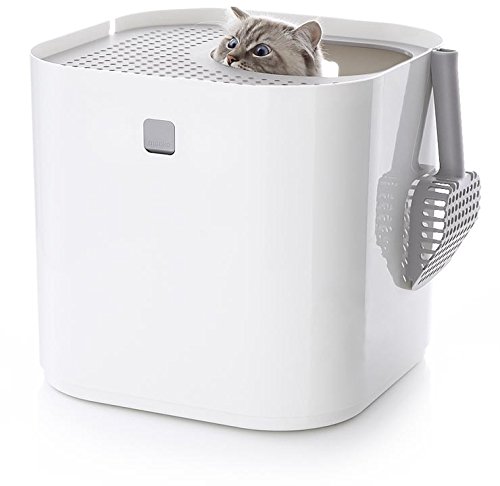
The Modkat is a fairly new and modern type of litter box, one that comes with a top entry system for cats. Now, this is not the cheapest box around, but it helps and is an effective way to contain that mess and cut down on smell.
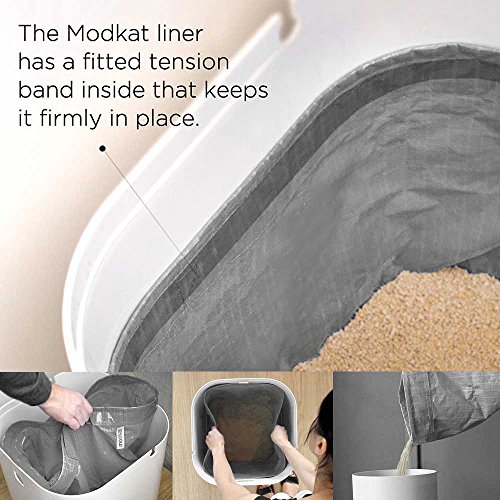
Also, most litter boxes can be fairly hard to clean, but thanks to the convenient liner which this litter box comes with, it is simple to clean, plus the liner is reusable as well.
It’s swinging lid is designed for easy access and for easy cleaning is a big time saver. And it will help to keep your home a lot cleaner than it would be otherwise.
All things considered, for what you get here, and for the benefits which the Modkat Box brings to the table, it’s an investment worth making.
Who is this product for? The Problem Solver!
If you have an indoor cat, the Modkat Litter Boxes are great for you. No, it’s probably not necessary to have if you have an outdoor cat, but for the majority of people who have indoor cats, this is definitely a useful item. Simply put, cats make messes around food and litter areas.
They tend to track litter around the home, which is stinky and dirty. Litter boxes also tend to be fairly hard to clean, at least normal ones are, which this one is not. Make your life a little extra easier with a Modkat product available right here!
So, if you want an easy-to-clean and mess-stopping litter box for your cat, the Modkat Box is worth looking into.
What’s included with the Modkat Litter Box?
When you buy the Modkat Box, you get the litter box itself, which is a vertical-entry litter box. Moreover, it comes with reusable plastic liners. And also a tool for cleaning the litter. The box itself is color white, a neutral color for any decor.
These liners are moisture proof and very resistant to ripping. Moisture won’t seep through the liner, and your cat should not be able to scratch holes through it either. It’s an effective and easy-to-clean liner that can last up to 3 months, but once 3 months is up, you will probably need to buy a new one.
PREVENTS LITTER TRACKING: The patented design of the Modkat top-entry litter box nearly eliminates litter tracking. The locking lid acts as a walk-off mat that keeps litter in the box and off of your floors.
SWIVEL LID = EASY CLEANING: Simply swivel and scoop. Any litter left on the lid will drop neatly inside when the lid is opened.
REUSABLE LINER: The Modkat Reusable Liners are tailored to fit neatly inside the Modkat Litter Box. They are rip-resistant and easy to clean. Liners can last up to 3 months.
LOOKS GREAT IN YOUR HOME: The award-winning, modern design looks great and complements any room.
ALL-IN-ONE SOLUTION: Comes with everything you need; a full height seamless base to prevent leaks, an easy open swivel lid, large hanging litter scoop, and a reusable tarp liner for effortless litter removal. View on Amazon
For one, the Modkat Litter Box is a fairly large litter box, one which your cat can easily fit into, plus it can hold a fair amount of litter. The box itself features a seamless design so no waste and moisture can seep through any cracks making it perfect for side pee-ers.
The plastic itself is quite tough, and it itself is designed to be simple to clean. This is a vertical entry box, one with a swivelling lid. Now, the lid has a hole in it big enough for your cat to climb into and out of with ease. The swivelling aspect is actually for you, because it makes the Modkat easy to clean and empty.
The Modkat Litter Boxes features special reusable plastic liner bags. These bags are made to be very thick so that they don’t rip if you cat claws at them. They are also made thick so that there is no chance of anything ever leaking out of them. What is nice is that these bags last for up to 3 months, depending on how many cats you have.
They are slick and very easy to clean with some soap and hot water. Other than that, the Modkat Litter Box does not have any other features. It might be a very simple and straightforward item, but it is definitely very effective at performing its intended job.
Tutorial of the Automatic Litter Box
The Modkat Litter Box is very simple to use. It’s a cat litter box with a swivelling lid. Simply insert the included litter box liner which is tailored to fit the shape of the inside of the box.
Once your cat has used the litter a few times, simply pick up the liner and pour the contents into the trash or cat litter disposal bin. The liner can be washed with hot water and soap, which is convenient; then reinsert it into the Litter Box. Other than that, there is nothing you need to know about using the Modkat top-entry litter box.
If for whatever reason you are not a huge fan of the Modkat Litter Box, there are other options of course. One of these options is the Modkat XL Litter Box. As the name implies, it is designed for larger cats and can hold a larger quantity of litter. It also comes with a reusable liner, just like the other Modkat Box we looked at.
The real difference here is that the XL model can be modified for top or front entry, which is convenient. It also comes with a scoop (modkat scoop), plus a side door to make scooping waste and cleaning easy.
Conclusion
Our thoughts on the modkat litter box review. When all is said and done, the Modkat Litter Box does make life a lot easier when you have a cat. For one, it just looks a whole lot better than a normal litter box, which can be downright unappealing.
This Litter Box is great for stopping your pet from making a mess that permeates the entire home. It stops the tracking of kitty litter and waste throughout the home. It keeps your floor clean, and is itself is easy to clean as well making the litter box experience more enjoyable. If you are tired of cat messes in your home, this is a good thing to have in your arsenal. The Modkat product is one we recommend and overall rated by cats to love.
( Check out our full guide on best cat scratching posthere )
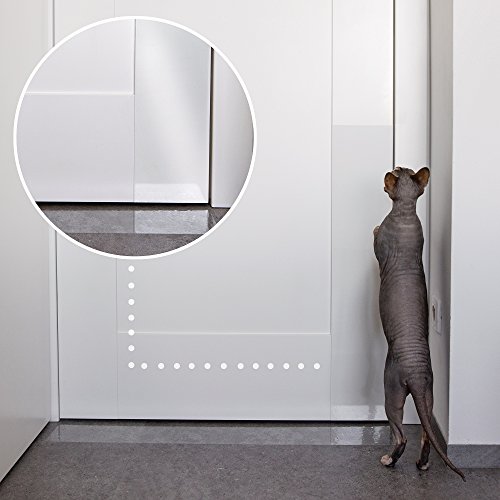
Many cats do not like closed doors at all. As soon as a door is closed, they begin to scratch it and sometimes complain loudly. The behavior can be very annoying, especially at night. Read on for tips to keep cats from scratching doors.
Scratching a cat’s door can not only strain the nerves of the pet owner, it can also cause damage. For example, if a cat frequently scratches the apartment door, it can show considerable scratches, which can be extremely expensive, particularly for tenants.
It is quite possible to stop the room tiger from scratching the door. First and foremost, this requires consistency. In addition, some rules of conduct can help you train your cat to scratch the door.
Why do cats scratch on closed doors?
Cats scratch for different reasons. Often, these are completely natural behaviors that serve to mark areas or care for claws. If your cat scratches the sofa or wallpaper, this can be explained with the natural behavior and should be redirected to objects such as the scratching post.
This is different when scratching the door. As a rule, these are not natural basic needs, but there are usually other reasons for behavior.
Why does my cat keep scratching the door?
Most velvet paws scratch on closed doors because they want to get to the pet owner. Therefore, this behavior can often be observed at night when cat owners lock their bedroom door.
Other cats also show behavior during the day when, for example, the bathroom or front door closes and they can no longer get to the pet owner.
Still other four-legged friends have a particularly strong aversion to closed rooms. As soon as a door is locked, they start scratching and meowing. In the situation, the animals are very unsettled and can even panic.
How to stop cats from scratching doors?
Your cat is scratching the door? It would certainly be easier at this point to always keep the doors open so that your room tiger can get anywhere at any time. In reality, however, this is difficult and don’t need to. Because with training you can stop the cat from scratching doors:
1. Get the cat used to closed doors
In this first step, you get your cat used to enclosed spaces. To do this, go into the room with your velvet paw and close the door. Your cat will then receive a reward, for example through a positive response, petting, playing or a treat.
This first step should be repeated several times a day over a period of one week. Be sure to do the training in different rooms.
Soon your cat will no longer only experience the closed rooms negatively, but will connect them with something positive. If your cat stays noticeably quiet when closing the door and may even be expecting her or his reward, you can slowly take the second step.
2. Get the cat used to a closed room without a pet owner
In this training step you proceed as before, but only your cat is in the closed room. With the door you separate it from yourself.
Your cat gently and slowly get used to the new situation. Therefore, only close the door for a few seconds, then open it and the cat will receive its usual reward.
Over time, you can increase the intensity of your training by increasing the amount of time your cat has to stay alone in the enclosed space. If it is only a few seconds at the beginning, your cat may endure a few minutes behind the closed door after a few days. Make sure that it does not meow or scratch during this time.
Training was successful if your cat stays calm behind the closed door. If you close the room and your cat scratches the door, repeat the training and slow down.
Behavior when scratching the door at night
The training should also make nightly door scratching unnecessary. Because your animal understood that a door opens again and that locked room doors don’t have to be bad. If it happens that your cat scratches the door again at night, don’t give in under any circumstances.
The scratching and whining should never be rewarded by opening the door. If your animal is not supposed to enter the bedroom at night, there can be no exception to this rule.
You can provide your animal with food for the nightly appetite. In addition, it often helps if the cat is more busy during the day. Extensive games in the evening can help to ensure that the nocturnal animal does not get bored at night and therefore tries to get to the animal owner.
Balls or special activity toys are particularly suitable for this. However, toys such as cat fishing with long lines or the like should not be left unattended to the animal, since the risk is too great that your animal will be injured.
How do I stop my cat from scratching at the door?
Consequence: It is important so that your animal can rely on your behavior. He or she has to understand that his/her behavior is stuck. If you give in once, you have to start training again and have a harder time getting the unwanted behavior out of the cat.
Tips for successful training
For successful training, it is not just a matter of adhering to various training steps, but it is also important to consider other basic training elements.
Patience: The consistent training should take place over a longer period of time. This can require a lot of patience from the pet owner. However, it is worthwhile to be calm and patient, because afterwards your animal will also behave more calmly.
Small training steps: Do not put too much effort on your cat and adjust the pace to the individual receptivity of the animal. Small steps lead to success better than training that is too fast and impatient.
Positive reinforcement: scolding leads to nothing in cats. This can even worsen behavior and negatively affect the relationship of trust. It is better to work with positive reinforcement. If your cat behaves correctly, show it with rewards. Improper behavior is ignored, which will teach your cat that this will result in nothing.