Tag: food

  • How Long Does Cabbage Last?

    Cabbage is featured in many delicious, hearty, and healthy meals and can last longer than most vegetables. Cabbage can last between 3 days to 18 months, depending on the method of storing it!

    A whole, raw cabbage can last about 1-2 months if properly stored in the fridge. Cooked cabbage can last 3-5 days in the refrigerator. Best quality cabbage in the freezer will last 10-12 months.

    Cabbage contains very little water compared to a traditional vegetable like spinach or romaine, giving it a longer shelf life. When you go to the store to buy your cabbage, there are a few things you need to know so that you can select the right cabbage.

    Cabbage in the fridge

    How long does fresh raw cabbage last in the fridge?
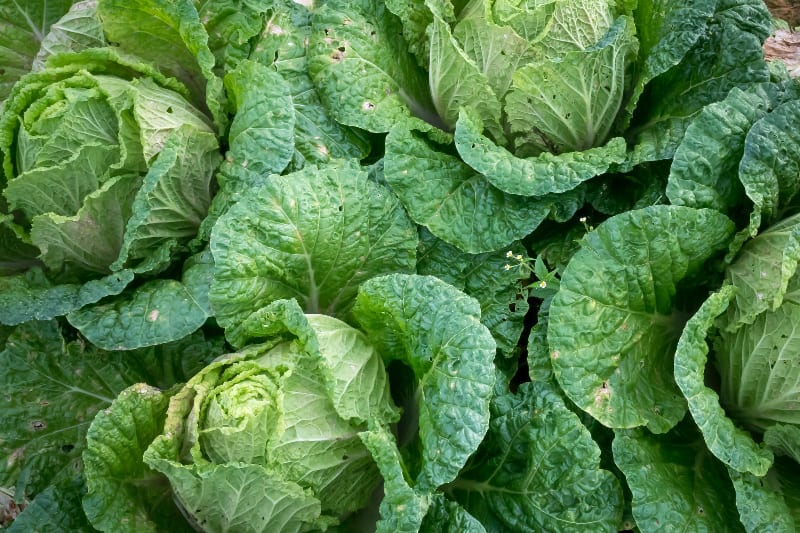
    cabbage plants laying together
    green cabbage plants

    Once you cut your cabbage, it begins to lose vitamin C and maximize your cabbage’s shelf life and refrigerate it in a plastic bag. Don’t wash it until you’re ready to use it. If appropriately stored raw cabbage in the fridge can last for 1-2 months!

    Keeping your cabbage cold can help retain its crisp texture and nutrients.

    You can also freeze raw cabbage; follow these steps.

    1. Wash the cabbage thoroughly and remove rough leaves
    2. Separate it into leaves or cut into thin wedge
    3. Blanch it for 2 minutes, then dip in ice cold water
    4. Drain excess moisture and place the cabbage into air-tight containers and freeze.

    Does cabbage need to be refrigerated?

    Once you cut off the head of cabbage, it quickly loses its freshness, so it’s best to use it the same day. If some have remained, sprinkle a few drops of water on the cut side, put in in a plastic bag, and refrigerate it.

    How long can cooked cabbage last in the fridge?

    At most 3-5 days, but for longer shelf life, freeze it in an airtight container or heavy-duty freezer bags.

    What is the Shelf Life of Cabbage?

    The duration that cooked cabbage in the fridge stays fresh depends on how it’s stored in the refrigerator within two hours after being cooked. To prolong its shelf life and preserve its quality, keep it safe to eat, use an air-tight shallow container or wrap it with aluminum foil before placing it in the fridge. If properly stored, it can last for about 3-5 days in the refrigerator.

    Cooked cabbage can also be frozen by freezing it in airtight storage containers or using heavy-duty freezer bags. If kept frozen continuously at 0 degrees Fahrenheit, they will retain their quality. Cooked cabbage that has been thawed in the fridge is good for only 3-4 days before cooking, but if it has been softened in cold water or a microwave, you need to eat it immediately.

    Cooked cabbage at room temperature

    If you leave cooked cabbage at room temperature, bacteria will quickly grow and should be throw away if you leave it for more than 2 hours. If the cooked cabbage has an off smell or has a funny appearance, don’t taste it; throw it away.

    The good thing about cabbage is it has the most extended shelf life among all other vegetables. From selecting the right cabbage to how to store cabbage in the fridge, all these processes are essential in determining how long your cabbage lasts in the refrigerator. Cabbage can last between 3 days to 18 months, depending on the method of storing it.

    Watch this for more on how to store cabbage in the fridge.

    How to select the right cabbage
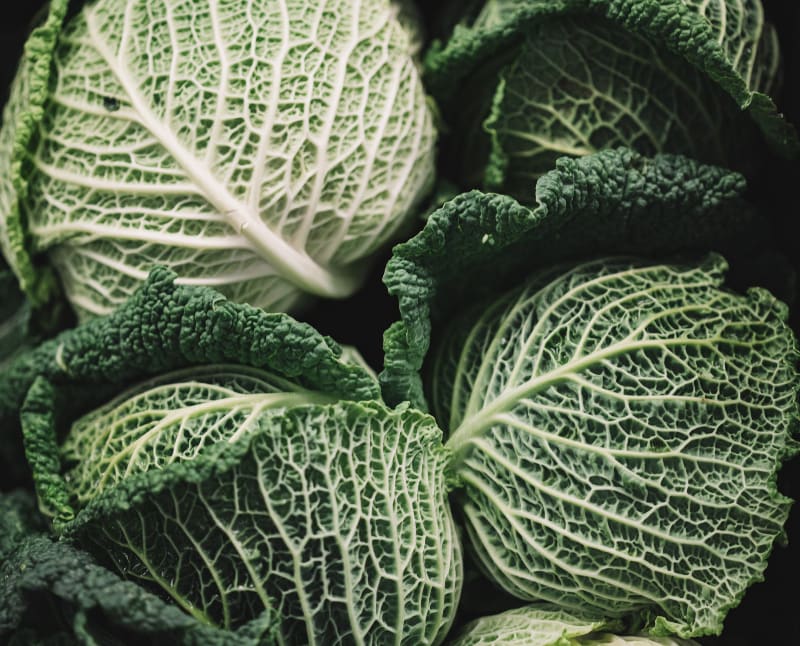
    four healthy cabbage heads together
    healthy cabbage heads

    Tips

    1. An average cabbage weighs around 1-7 pounds, and a cabbage head should be large and not be fluffy, sober according to its size, and tender green leaves that don’t have any signs of damage, insect bites, blemishes, or dark spots.
    2. Fresh cabbage has a lot of outer leaves that are mostly removed as the cabbage ages. To get a new cabbage, check at the stem to ensure the leaves aren’t beginning to separate. This is an indication of how old the cabbage is.
    3. If you’re buying already shredded and bagged cabbage, remember to use it by the best before date. It saves you time, but it can be more expensive, and make sure to rinse it cold before eating.
    4. Cabbages either have a green or red color, look for the ones that are shiny and bright with an almost lime green color. As for red cabbage, go for the ones with a deep-maroonish color.
    5. Make sure the cabbage is firm to touch on the outside. If it feels soft and hollow inside rather than firm and compact, it could be rotten on the inside.
    6. Go for a cabbage that only has a few hanging leaves from the head. If it has many leaves that aren’t tightly pressed to the center, it may have a funny texture and flavor. Also, go for leaves that are crisp rather than soft because soft leaves could be because the cabbage is old or it’s damaged.
    7. Cabbages with a more massive head have a milder flavor than small ones that are more compact.

    Other Questions about How Long Cabbage Lasts

    How long does cabbage last after cut?

    The best way to keep cabbage fresh is to wash and dry it before wrapping it in a mesh bag and keeping it in your crisper drawer. It should be good for about 2-3 days.

    How do you know when cabbage is bad?

    The most common presence of bad cabbage is when the leaves are shriveled and start to change the color from deep or bright green to yellow, grey or brown. In worse cases, once the cabbage is rotten, it doesn’t smell fresh or firm to touch anymore but replaced with a soft texture and develops an off odor.

    Source: 10 Kitchen

    Does cabbage need to be washed?

    Although cabbage is usually clean on the inside because the outer leaves protect it, it’s good that you wash it. To preserve its nutrients, especially vitamin C, cut and wash the cabbage right before cooking or eating it.

    Can fresh shredded cabbage be frozen?

    You don’t need to blanch cabbage before you freeze it, but you need to use it before 4-8 weeks. But you can blanch it for 90 seconds to make the frozen cabbage last longer.

    Can I freeze cabbage?

    Freezing raw cabbage for months changes the texture and damages the structure. The best thing is to put it in the fridge, but you can cut into wedges before storing in the freezer.

    Frozen cabbage can stay in good quality for more than 18 months.

  • Beetroot Benefits for Men: Yes, it Helps with That

    Beetroot Benefits for Men: Yes, it Helps with That

    Beetroot has gained popularity as a superfood — especially in improving their men’s sexual performance and cardiovascular health.

    Many beetroot benefits for men include improved physical performance, increased blood flow, and lower blood pressure. Eating more plant foods like beetroot can also decrease health risks you’re exposed to like diabetes, obesity, and heart disease.

    Beet juice helps the body produce nitric oxide. Nitric oxide is often used to open up the blood vessels and is sold as a dietary supplement for ED.

    Athletes need all their meals to contain nutrients that are good for the body. According to some workout routines, eating greens and fruits can become a nice habit. Healthy smoothies and juices that can be transported easily helps training since it’s easy to consume.

    Fruits and veggies are very important; especially beetroot. Incorporating beetroots in almost all juices and even in meals can help you notice improvements not only in training, but health in general. You’ll gain more energy and even improve matters in the bedroom. 😉

    Consuming fruits and vegetables has always been known to reduce many lifestyle health conditions. It can help increase your energy, lower your weight, and give you better skin and hair. If you haven’t started including beetroot in your diet, it’s time to have a second look at this great veggie that has the potential to change your health and your whole family.

    Beetroot benefits for men

    Improve athletic performance

    Athletes use beetroots because of its dietary nitrates that can help improve their athletic performance. Drinking beetroot juice before any workout can help to boost your energy levels so that you can train for longer. Beetroot dilates your blood vessels during your workout increasing blood flow to your muscles.

    Help support brain health

    As you age your mental and cognitive functions age with you which can lead to conditions like dementia. This is caused by a decline in the amount of blood and oxygen flowing to your brain.

    Beetroot is rich in nitrates that help to improve your mental and cognitive functions by expanding the blood vessels so that more blood can flow to your brain. This improves blood flow to your brain’s frontal lobe that is responsible for making decisions and memory.

    All medication given for erectile dysfunction are aimed at increasing nitrates in your body so eating beetroot is a more natural way of getting the nitric oxide.

    Beetroot is rich in dietary nitrates that produce nitric oxide in your body. This gas opens up the blood vessels to increase blood flow to reproductive organs.

    Having high blood pressure can make it difficult for blood to flow to the to get an erection. Drinking or eating beetroot regularly may lower your blood pressure removing the strain on the blood vessels so that blood can flow.

    Reduce the risk of cancer

    Cancer and especially prostate cancer is a serious and potentially fatal disease that ct help to reduce the growth of cancer cells. Betalain is a compound found in beetroot that helps to reduce the growth of prostate cancer in men and also breast cancer in women cells.

    Keep blood pressure levels in check

    Heart disease like stroke, heart attacks, or heart failure is mostly caused by high blood pressure. For an athlete, having high blood pressure affects your training and also your performance.

    Beetroot helps to lower your blood pressure which relaxes your heart because of the nitric oxide that dilates your blood vessels causing the pressure to drop.

    Drinking beetroot juice and eating foods rich in nitrates like veggies and fruits can be a more cost-effective way of treating blood pressure and cardiovascular health.

    These beetroot benefits for men are quite something

    Beetroot or beetroot juice is packed with vitamins and minerals that your body needs to work out and for the general health of your body. It’s an important veggie that helps to treat many diseases and conditions facing men.

    It prevents the growth of prostate cancer cells, helps to treat erectile dysfunction and improve sexual activity, keep your blood pressure in check by expanding the blood vessels to increase blood flow to the body, and improve your athletic performance and endurance.

    More Questions About Beetroot Benefits for Men

    Is beetroot good for erectile dysfunction?

    Beets are high in nitrates which your body converts into nitric oxide. Nitric oxide improves blood flow to your body which helps to initiate and maintain an erection.

    Are beets good for testosterone?

    Beets are considered to be a natural alternative to other medications that give you a healthy erection. Beets contain high levels of boron, a mineral that increases the production of testosterone in your body.

    Do beets increase estrogen?

    Beets are known to be blood purifiers and builders that help in production of more red blood cells. Beets are also known to help balance your hormone production and remove excess estrogen which is toxic to your liver.

    What is the best natural remedy for erectile dysfunction?

    Studies have shown that high doses of L-arginine found in beets can improve erectile dysfunction by expanding your blood vessels to increase blood flow. Ginkgo is also a natural remedy alternative.

    What do beets do for a man?

    Beets are effective in lowering blood pressure in men. The high nitrate content is converted to nitric oxide by your body which improves your heart health.

  • Is Urine Discoloration by Beets Abnormal or Normal?

    Is Urine Discoloration by Beets Abnormal or Normal?

    The odd color change in your urine after eating beets can be alarming because it looks like blood. However, it’s important to know is urine discoloration by beets abnormal or not.

    A frightened mother booked an appointment in my clinic to seek medical advice about her child. After listening to her describe the symptoms all she said was her child peed red after eating beets for dinner. I explained to her that beets can at times cause someone to have red urine or poop which most of the time isn’t a harmful thing.

    Beets

    Beets are great root veggies that have many health benefits and contain lots of vitamins, minerals, and other nutrients good for your body. Eating beets lower your blood pressure, increases your energy levels, and improves your immune system. However, beets have an unusual side effect that is a bit alarming to some people. Beets cause beeturia, which means your urine or poop turns red or pink.

    Different colors of urine

    Normally, urine is supposed to have a straw yellow colour but depending on what kind of fluid and how much you take during the day, the yellow hue can change. Your urine becomes dark yellow if you don’t take much fluid.

    It can turn darker yellow or orange if you take foods rich in vitamin B or carotene or some medication. Also if you take lots of vitamin B2 supplements your body will take what it can use or store and the rest is passed on to your kidney and to your urine.

    Blue or green urine can be caused by artificial food colouring found in certain foods you consume while milky urine can be as a result of an infection or bacteria in your urinary tract. If you’re taking antidepressants, antihistamines, antibacterial, or anti-inflammatories the medication can cause blue or green urine.

    When you pass brown urine it could be caused by liver or kidney disorders, infection in your urinary tract, eating foods like fava beans, aloe, or rhubarb. Laxative drugs with cascara, metronidazole, or chloroquine can also be a cause or if you’ve suffered a severe muscle injury.

    Click here to learn more about the colours of your urine and their meaning.

    Is urine discoloration by beets abnormal?

    What causes red urine or beeturia?

    Drinking beet juice from raw beets can turn your urine deep red or light pink and if you consume boiled beets your urine can turn light red or pink. Beets contain betalain, a compound that gives beets the red colour. If your body isn’t able to break down this pigment it passes to your kidney which you then passed out as pink or red urine. Although this is a harmless side effect to eating beets, it can be a health concern which may require medical attention if the symptoms persist 48 hours after you stop taking beets.

    Red or pinkish urine could be as a result of low iron in your body which means you don’t have enough red blood cells to carry oxygen to the rest of your body. It could also be a sign of liver diseases, extreme dehydration, or accumulation of bilirubin. If your stomach acids can’t absorb nutrients, vitamins, and minerals, it could be difficult to metabolize betalain so it’s passed in your urine. If you feel bloated, constipated, or have gas you could be having low stomach acid.

    The presence of red blood cells in your urine can also turn it red which means you have problems with your renal system and kidneys, urinary disorders, or severe mercury or lead poisoning. If you do any strenuous exercises like distant running, vigorous exercises can cause you to have urinary bleeding. Tumors in the bladder and kidneys are most common in older people or enlarged prostate glands in men can cause blood to be found in their urine.

    Treating beeturia

    Since most of the time it’s not a harmful side effect, you don’t require any medical treatment. However, if it requires medical attention it’s good to go for the necessary tests and take medication that will treat the underlying problems.

    So, is urine discolouration something you should be concerned about?

    Eating beets is very healthy but sometimes it can cause anxiety if you see red or pink urine. So if your question is, is urine discoloration by beets abnormal, the answer is not necessarily. This is because this is a side effect that is mostly harmless but at times it could be a sign of a more serious underlying problem that needs medical attention. It’s also important that you understand the meaning of other urine colours.

    How long does beet juice stay in your urine?

    If you don’t notice any red colour in your urine within 24 hours after eating beets it means your body is taking too long to digest food. If waste stays too long in your gut it’s reabsorbed.

    Is pink urine a sign of iron deficiency?

    Although having pink urine after eating beets is something normal it can sometimes be a sign that you’re lacking iron in your body. Your body doesn’t have enough red blood cells to carry oxygen to your body.

    How can you use beets to test your stomach acid?

    Your stomach acid and gut help to breakdown pigments in your foods if they’re low it could cause beeturia. If your stomach acid is low your body can’t properly metabolize the beet pigment and it’s passed in your urine.

    Is it OK to eat beetroot during pregnancy?

    Eat beetroot during your pregnancy is good because it has so many health benefits to you and the fetus. It can protect you from getting anemia, boost your immunity, help your baby to grow, etc.

    When is the best time to start eating beetroot during pregnancy?

    In your second trimester is the best time to start eating beetroot to get all the nutrients for a healthy pregnancy and baby. Beetroot can make you throw up if you have morning sickness.

  • Is it OK to Eat Beets Everyday?

    Is it OK to Eat Beets Everyday?

    Beetroot has some of the best health benefits. Laxative properties of beetroot help your bowel movement and digestive system function properly. What about consuming them daily?

    According to WebMD, 70-140 mL of beetroot juice or 7/8 cup of baked beetroot daily has been used to enhance athletic performance. Currently, there are no studies to determine how much beets are safe to eat daily. People with diabetes, low blood pressure, those who frequently get kidney stones, and those who are pregnant should talk to their doctor before adding beets to their daily diet.

    Beets and Your Digestive System

    Beetroot has been used by the ancient Romans to treat many ailments and it’s still being used today. With each glass containing 58 calories, you get all the nutrients your body needs to stay healthy. Beetroots help to improve your digestive health thanks to their fiber and folate content but they also have some unexpected yet harmless temporary digestive effects.

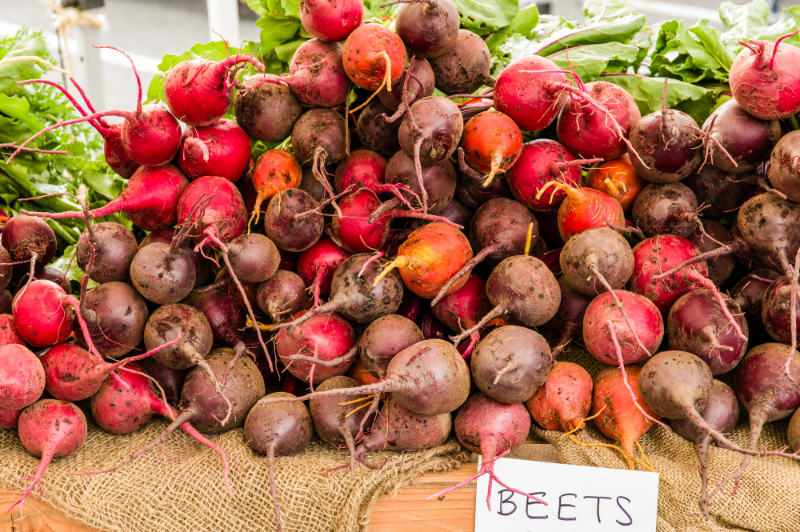
    lots of raw garden beets on wood table with beets sign

    High Soluble Fiber Content

    There are great laxative properties of beetroot that help keep your stomach healthy with its high soluble fiber content which is a very important carbohydrate for your digestive health. This helps to prevent constipation by cleansing the colon and your stomach so that you can have regulated bowel movements.

    What are the health benefits of beets?

    Eating beets can bring many health benefits and can make you want to add them to your daily diet. Beets help lower blood pressure, reduce the risk of cancer, supports brain health, may fight inflammation, and can improve athletic performance. Eating beets too much can cause your pee or stools to turn red or pink, yet this is not harmful. Eating them daily may increase the risk of kidney stones.

    Note: if you are eating beetroot for fiber, one cup is a good source of fiber.

    Beets are also rich in dietary nitrites. This lets your body convert them to nitric oxide.

    4 of the Best Laxative Properties of Beets

    1. Dietary fiber

    The dietary fiber reduces the risks of getting a diverticular disease that causes an inflammation in your colon that leads to bloating, nausea, gas, and irregular bowel movement. The fiber softens your stool so that you’re able to pass it easily and regularly. Regular intake of beets increases the fiber content.

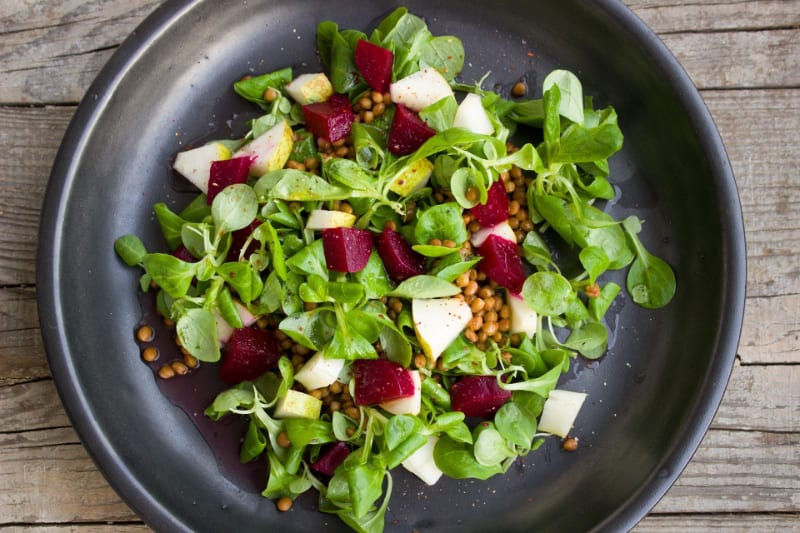
    salad with beets in it on black plate on wood table

    Fiber is also said to reduce the risk of people developing chronic diseases like type 2 diabetes, colon cancer, and heart disease.

    2. Digestion

    Betaine is found in this root vegetable of beets. Betaine is a compound found in beets that is very good for your digestive system. It improves your digestion by increasing stomach acid levels to help with your bloating issues, control the growth of bacteria and yeast, and prevent food intolerances.

    By including foods rich in betaine in your diet you correct the low stomach acid levels and make it easier for your stomach to digest food and absorb nutrients.

    3. Vitamin B9 or Folate

    Vitamin B9 or folate helps your digestive system. Folate reduces the risk of colon cancer that is mostly associated with alcohol consumption. Folate also helps in cell growth and in repairing tissue in your digestive tract.

    With each intake of beets, your increase your daily folate needs. Folate is also good for encouraging healthy skin and hair and protecting your mouth from ulceration and soreness.

    Pregnant women are advised to take folic acid which contributes to the health of the unborn baby and prevents congenital heart defects and other neural tubal defects in the newborn baby.

    4. Bad cholesterol

    Beets help to prevent the formation of plaque and reduce the oxidation of LDL or bad cholesterol from being deposited in the walls of your artery walls and small intestines. This prevents the smooth flow of food and nutrients to the body causing the formation of fat deposits.

    Side Effects of Beetroot

    Beets will at times turn your urine or stool red. This is a harmless and temporary side effect that will go away after a few days. However, it could also be a serious problem caused by a bleeding colon. It’s would be a good idea to get medical advice just to be on the safe side.

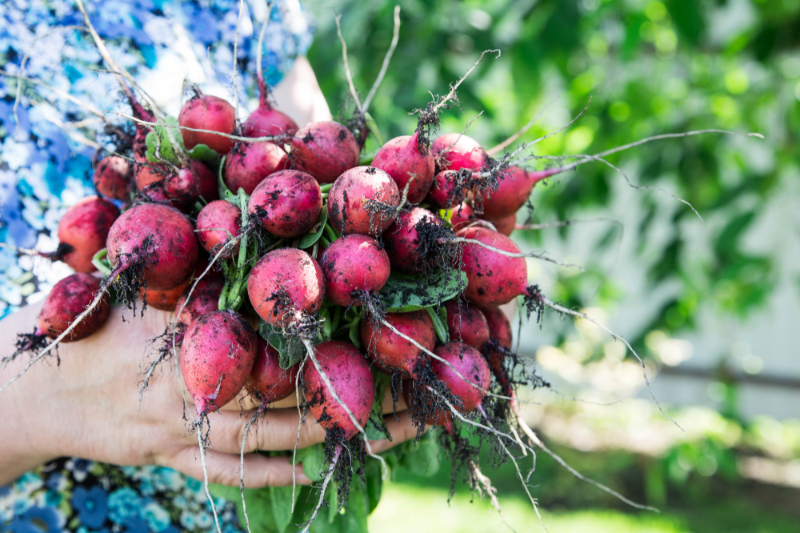
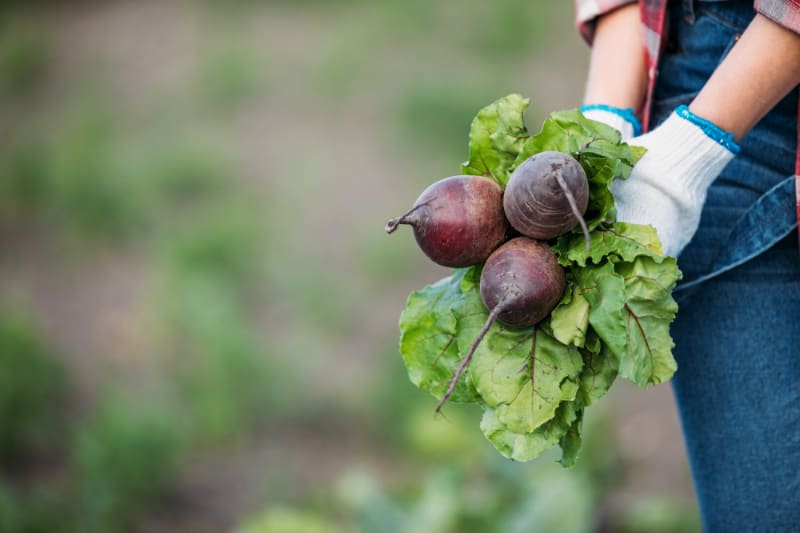
    gardener holding beets in field with white gloves

    Beets are a wonderful veggie that helps keep your digestive system healthy. It does away with the bloating, nausea, gas, and constant irregular bowel movements thanks to the high quantities of dietary fiber.

    Increasing folate in your body lower the risk of colon cancer and helps to repair tissue in your digestive tract to avoid the formation of ulcers in your stomach wall. And in case you’re pregnant increasing folate in your diet will give your newborn baby have the required birth weight and prevent any congenital birth defects.

    Is it safe to drink beet juice everyday?

    There are no specific studies that show if it’s safe to drink beet juice everyday. However, the people who have had one to two cups daily had seen a decrease in their blood pressure. Remember it’s always best to consult your doctor before trying.

    Dr. OZ recommends it doesn’t take much to receive the great benefits of this super vegetable, but to start out with a quarter of a cup of beet juice a day and slowly increasing over time.

    Beet juice is one of the healthiest foods you can give your body. Since the middle ages, beets have been used to treat many diseases related to blood levels and digestion.

    Beets have a tender, sugary, and plain taste that you can grow to love that will provide your body with a lot of nutrients.

    Apart from helping your body to absorb iron, beets contain lots of vitamin C, low calories, and no fat content.

    Health benefits of beets also come from edible leaves, but they have a more bitter flavor than the root. They contain lots of calcium, iron, and vitamin A. One glass contains minerals and vitamins you need all day in concentrated form.

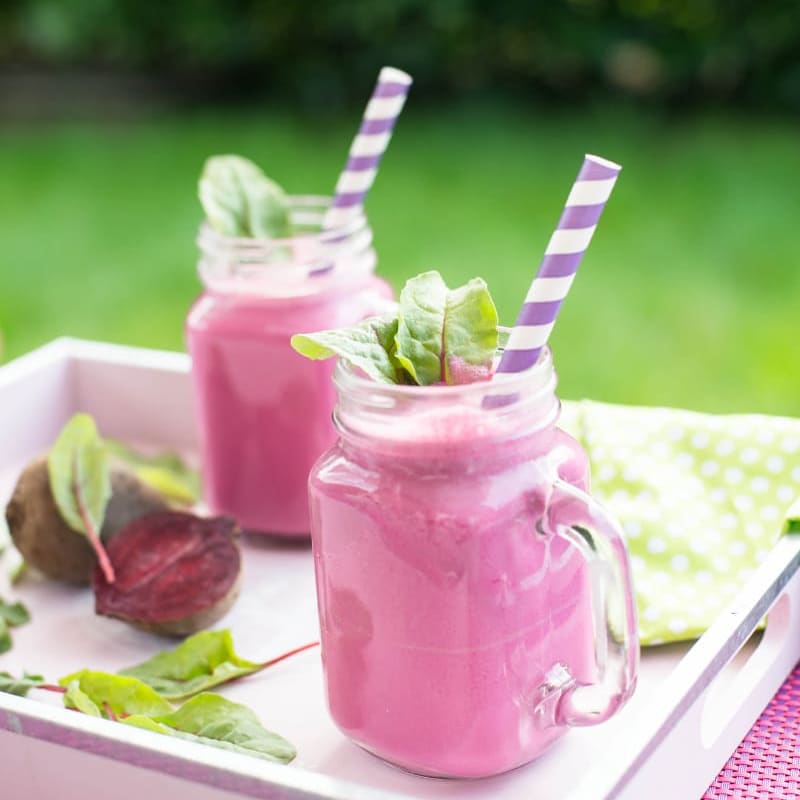
    beetroot smoothies sitting on a tray
    beetroot smoothies

    7 Benefits of Beetroot

    1. Improve your digestion

    Drinking any vegetable juice on an empty stomach helps to clean out your colon of all toxins and push out all the waste. Your colon can function properly and you don’t have that sluggish feeling anymore in your stomach after eating certain foods. It’s also good for preventing constipation. It supplies bulk to your stool and makes it easier for you to pass waste. Beet and carrot juice is good for curing kidney and gall bladder issues.

    2. Detoxify your system

    Drinking beet juice first thing in the morning can make you feel nauseous. This is because it is purifying and detoxifying your body of all the toxins in your system. You are also able to easily empty your bowels to get rid of all the toxic waste in your colon. It stops the build-up of fatty acids and promotes the growth of your liver cells.

    woman smiling at the beach

    3. Absorb more nutrients

    Consuming beets on an empty stomach helps your body better absorb all the fiber and simple sugars found in the raw juice. The health benefit of a single-serving at home can help better heart health.

    3. Boost your brain and sharpen memory

    Give yourself a jump start by improving your concentration levels, attention span, and memory. You’re able to work faster and think better throughout the day because your nerve connections have a faster response.

    4. Helps maintain lower blood pressure levels

    Beet juice has high nitrate levels which are good for your blood pressure. Nitrates are a set of compounds that involve nitrogen and oxygen molecules.

    5. Gives you glowing skin

    Beet juice contains vitamin A and C and calcium that help to prevent your skin from becoming dry and flaky. Your skin is exposed to a harsh climate every day but beet juice will leave your skin feeling supple and rosy with a healthy glow. The antioxidants in beets help to protect your skin from any damage that can be caused by free radicals protecting your skin from inside out. The vitamin C in beets evens out your skin tone and clears any blemishes that are on your skin.

    6. Boosts your energy levels

    Beet juice helps to expand your blood vessels so that more oxygen can help blood flow to the rest of your body. You feel more energized and active and it wakes up your liver. Beetroot juice is a good pre-workout drink that will increase oxygen to your muscles helping you to exercise for longer and feel less tired.

    woman on beach smiling with happy energy
    boost your energy levels

    7. Taking beet juice at any time is good for your health

    Although beetroot juice has a fairly high amount of sugars it’s an excellent vegetable juice with lots of antioxidants, fiber, folate, iron, and lots of health benefits. Drinking beet juice on an empty stomach helps to boost your energy levels, detoxify your system, improve your digestion, and sharpen your memory.

    More Questions About Eating Beets Everyday

    Are beets good for constipation?

    Beets are high in soluble fiber which helps to cleanse your colon and clears your stomach helping your bowel movement. This way you don’t get constipated or have stomach problems because beets are great laxatives.

    Can eating a lot of beetroots discolor your stool?

    Sometimes you will find the red beet pigment in your urine or poop after eating beets. Beeturia is a harmless side effect but it could also mean you have an iron deficiency.

    Are beets difficult to digest?

    If you have low stomach acid it can be difficult for your stomach to digest and absorb beets. It may also be difficult to metabolize the red beet pigment that’s why you pass it in your urine or poop.

    How long does it take to get beet out of your system?

    The red pigment of beets in your urine goes away after some time but if you notice it even after 24 hours are over, this means that your body is taking too long to excrete waste from your digestive system.

  • Solid Benefits of Boiled Beetroot

    Solid Benefits of Boiled Beetroot

    Some people prefer to eat boiled beetroot than raw ones because of the taste. Nutrients aren’t lost if you boil beetroot and can benefit you long-term. If you like beets but cannot stand the earthy taste of them raw, try boiling them.

    Benefits of boiled beets include better digestive health, weight reduction, boosted energy levels, lower blood pressure, improved cardiovascular health, and the ability to fight inflammation.

    Many people are not a fan of raw beets because of the distinct earthy taste. They have lots of nutrients and are good for the body.

    Read on to learn how to prepare boiled beets right so that you don’t lose valuable nutrients and flavor.

    Benefits of Boiled Beets

    1. Improves Digestive Health

    1 cup of beetroot contains approximately 3.4 grams of fiber. This makes beets a very rich source of natural fiber. Natural Fibre helps relieve problems like constipation by speeding up the passage of food through the digestive tract. It also helps to relieve symptoms of inflammatory bowel disease.

    2. Helps in Weight Loss

    There are about 43 calories in 100 grams of beetroot. A combination of high fiber and low-calorie content makes beets ideal for weight watchers. One of the most difficult parts of dieting for weight loss is hunger pangs.

    Weight watchers can eat beetroot without having to worry about the calories while the fiber makes you feel full for longer so you don’t have to fight the urge to eat again for a few hours.

    3. Helps Boost Energy Levels

    Beetroots are best known for high nitrate content. Nitrates convert into nitric oxide which is a dilating gas. It makes the blood vessels widen which improves blood circulation and oxygenation of cells.

    When cells become oxygenated, energy levels increase. Energy levels are increased for a few hours after which the effect gradually reduces.

    4. Helps Fight Inflammation

    Chronic inflammation is a symptom common to various conditions such as arthritis, Alzheimer’s disease, stroke, and cancer. Beetroots contain an amino acid called betaine which helps to relieve inflammation.

    Although inflammation is a healthy, protective reaction, chronic inflammation can be extremely painful. Betaine, along with other phytonutrients in beetroots such as violaxanthin and isobetanin inhibits the enzymes which signal cells to ‘flame up.’

    5. Lower Blood Pressure

    Since beets contain high nitrate content and nitrates can help improve blood circulation, this will help with a lower blood pressure while consuming the beetroot. If you can eat more beets because they are boiled, then the benefit can be better blood flow.

    Why Should You Boil Beetroot?

    Beetroot is very high in fiber and low in calories which helps you eat less; making it the perfect food if you want to shed some pounds. You also get minerals like potassium, calcium, iron, and phosphorous, and manganese. Some people love to eat beetroot because of cardiovascular health benefits.

    Beetroot is a very good source of folate or Vitamin B9. You can also get both of these from green veggies or other foods with folic acid. They contribute to lower levels of homocysteine in your blood that is associated with heart disease.

    How to Boil Beets

    Here is how to boil your beets to ensure you keep as many nutrients are possible.

    1. Cut off the stalks and tails making sure to leave at least 1 inch of stalk on to make sure none of the flesh is exposed. You will lose some nutrients, color, and flavor if any flesh is exposed.
    2. Scrub the surface of the vegetable with a potato scrubber. Be sure not to scrub too hard so that you do not break the skin and expose some flesh.
    3. Place the beets in a stockpot and submerge them with water, with at least 5 inches of water above them.
    4. If you want to add some flavor, add one teaspoon of salt and one teaspoon of sugar to the water. This measurement applies to a half-gallon (2 liters) of water.
    5. Cover the pot and leave to boil.
    6. Once they are cooked, remove them from the boiling water and place them in a pot of cold water for 5 minutes.
    7. Rub the skin with your fingers. It should peel off easily.
    8. Cut the boiled beets as required depending on what you intend to use them for. For salads, dice them into cubes. If you intend to stew them you can cut them into quarters.

    How long do you boil beetroot?

    There is no hard and fast rule as to how long beets should be left to boil. Usually between 20 minutes to 40 minutes. It depends on several factors including the size of the beets. Large beets take longer to cook than small ones.

    When boiling beets try to use beets that are approximately the same size. If sizes vary widely it will be difficult to have all of them evenly cooked.

    The number of beets in the pot matters. If you are boiling a few pieces for one meal it will take a lot less time than if you are batch cooking for storage.

    Some people like to cook their beets but retain the crunch. In this case, use a brief boil. If the intent is to use the beets for a mashed dish, boil them longer so they are soft enough.

    Other Benefits from Beetroot Juice

    1. Beetroot has betalain

    You can eat raw or boiled beetroot or leafy green veggies like spinach and kale to get your dietary nitrates. Beetroot contains betalain that has many health benefits although no specific amount is recommended, by adding beetroot to your diet once or twice a week will give you all the nutritional benefits of beetroot.

    2. Beet juice from boiling has fiber

    Beetroot juice has high concentration levels of betalain but boiled or cooked beets have more fiber. If you over boil the beets you might lose many nutrients because beets are sensitive to high temperatures.

    3. Anti-inflammatory benefits of beets

    You get anti-inflammatory betalains and phytonutrients when you eat beetroot or drink beetroot juice. If you’re looking to enhance your athletic performance drink beetroot juice, but if you want fiber to help you in losing weight boiled beetroot has high fiber content. It will leave you feeling fuller for longer and keep hunger pangs and cravings away.

    4. Boiled beetroot reduces concentrated levels for a baby

    Raw beets have more minerals, vitamins, and antioxidants than boiled beetroot. When you boil any vegetable for long the colorful phytonutrients are left in the water. This is a good way of reducing the nutrients concentration levels in beetroot when cooking for your baby. This is to make it easy for digestion to take place since the baby’s stomachs are sensitive.

    Boiled beetroot puree

    You can use boiled beetroot greens to make a puree that you can apply on your face as a face mask to help fight wrinkles. The carotenoids and Vitamin A in beetroot help fight early signs of aging.

    Lutein is a potent antioxidant that helps fight free radicals. You can combine the beetroot with other fruits that are good for your skin to make it glow and healthy. Regular eating of beetroot has also been found to prevent skin cancer cells from growing.

    Watch how to boil beetroots properly so that you don’t lose all the nutrients.

    <iframe
    loading=”lazy”
    width=”560″
    height=”315″
    src=”https://www.youtube.com/embed/GANHpP3PM2I”
    srcdoc=”*{padding:0;margin:0;overflow:hidden}html,body{height:100%}img,span{position:absolute;width:100%;top:0;bottom:0;margin:auto}span{height:1.5em;text-align:center;font:48px/1.5 sans-serif;color:white;text-shadow:0 0 0.5em black}How to Boil Beets - YouTube - YouTube
    frameborder=”0″
    allow=”accelerometer; autoplay; encrypted-media; gyroscope; picture-in-picture”
    allowfullscreen
    >

    Boiling beetroots are one way of eating beets if you’re not fond of the earthy taste of raw beets or if you’re preparing food for your baby. Beetroots are highly concentrated with nitrates that your baby’s stomach won’t be able to digest and boiling them remove some of the nitrates. Boiled beetroot has more fiber than juice which is the best if you’re thinking of losing some pounds. This way you’re more full for longer and avoid cravings.

    More Questions about Boiled Beetroot

    Does boiling beetroot remove nutrients?

    The heat does destroy some heat-sensitive nutrients but if you stick to brief boiling and keep the vegetable’s skin on you will lose very little.

    Should beets be peeled before cooking?

    Beet peels help add to the total amount of fiber you consume. Nutritionists advise against eating beet peels if the vegetable is not organically grown.

    How can I tell when beets are cooked?

    Check that you can insert a fork through the flesh. If it goes through easily, they are cooked. The skin should peel off easily when they are well cooked.

    How long do cooked beets last?

    If cooked beets are refrigerated they last between 3 and 5 days. To make them last even longer, freeze them in plastic, airtight containers, or heavy-duty storage bags.

    Should you juice beets cooked or raw?

    You can juice them in either form but nutritionists recommend juicing raw beets because you get all the nutrients including those that would be destroyed by cooking.

    Can you drink water from boiled beets?

    Yes, you can drink the water from boiled beets. You will need to drink at least half a liter to get the same nitrate levels as you get from the beet juice.

    Is beetroot better raw or cooked?

    Raw beets have a crunchy and sweet taste and you can use them to make juices, smoothies, and add to your salads and they retain their nutrients and natural flavor. Cooked beets are softer and have a sweeter taste that you can puree.

    Does cooking beetroot destroy their nutrients?

    When you cook beets you reduce the betalains and other nutrients like vitamin C because they’re sensitive to heat and high temperatures. It’s best to steam beets for less than 15 minutes or bake under low temperatures for about an hour to help retain their nutrients.

    Is raw beetroot good for you?

    Beets have numerous health benefits and are rich in dietary fiber, folate, potassium, calcium, magnesium, vitamin C, etc. The beet greens are also nutritious as they contain vitamin A and C, iron, and calcium.

    The iron, antioxidants, calcium, Vitamin B, and betaine make beetroot the best food for your liver. Beetroot thins the bile allowing it to flow easily through the liver and small intestines keeping the liver healthy. Betaine also helps to remove toxins and the fiber makes sure the toxins from the liver don’t re-enter your body. Beetroot is also said to protect your liver from any oxidative damage.

    Do you have to cook beetroot before you juice it?

    No, you don’t. You can wash the beets carefully them peel the skin and put them in the juicer. If you want the pulp you can blend your beets to get the fiber. Raw beets can be hard to eat for some. If this is the case, lightly boiling the vegetable with the skin on, then use it for juicing or eating plain.

    Beetroots can be eaten raw but many people prefer to cook them because cooked beetroots are generally sweeter than raw ones. They can be steamed, roasted, or boiled. Boiling is popular because it helps retain most of the nutrients and requires very little work.

    Ending Thoughts

    For anyone who does not like the natural, earthy taste of raw beets, boiled beets are the next best option. Beetroots can also be steamed or roasted but that requires more time and energy in the kitchen because you have to peel them.

    If you want to store beetroots for long, it is best to boil them lightly before freezing them. Freezing raw beetroots does not retain their natural taste and texture because they tend to get soggy when thawed.

  • 7 Benefits of Beetroot for Women

    7 Benefits of Beetroot for Women

    There are many positives of beetroot for women that you will find in this sweet vegetable.

    There are seven benefits for women when eating or using beetroot. Eating beetroot boosts iron during periods, increases libido, helps during pregnancy, supports healthy hair and hair growth, and improves skin glow. While applying beetroot can brighten lips naturally and help treat and prevent acne and pimples.

    Beetroot is a superfood that holds so many benefits to naturally improve your health. It has so many benefits it can be hard to resist trying a beet here and there. While everyone can reap these benefits, there are many benefits for women.

    Benefits of Beetroot for Women

    Beetroot is a nutrient-dense superfood that boosts the health of your mind and body. By adding beetroot to your diet you prevent yourself from getting chronic diseases like cancer, help in weight loss, and boost your longevity. Beetroot is an excellent source of vitamin C, folate, fiber, and potassium, and other vitamins and minerals.

    1. Supports Healthy Hair and Hair Growth

    This superfood is loaded with nutrients that help improve the circulation of blood flow to your scalp. Beets are also high in potassium. Which the lack of potassium can cause the build-up of sodium that prevents new hair from growing.

    If you are struggling with hair falling out, you can try adding beets to your daily regimen. Beetroot strengthens follicles making your hair super healthy.

    Beet juice can also be used to naturally dye your hair giving it a luscious deep red, purple, or pastel pink look depending on your natural color.

    2. Increases Iron During Periods

    Beetroot is full of vitamins and minerals and not forgetting iron. Iron is an important mineral that helps in the production of red blood cells, increased hemoglobin levels, and supplying your body cells with oxygen.

    During your periods you lose a lot of blood so you need more iron intake than the men. If you’re not getting enough iron because of poor diet, stress, or ill-health, you run the risk of getting anemia. Regular intake of beetroot can improve your hemoglobin levels, increase your energy levels, and prevent anemia.

    3. Increases Your Libido

    Beetroot has high levels of boron, a mineral that boosts the production of sexual hormones. Regular intake of beetroot juice will help your body use and metabolize estrogen in women and increase the levels of testosterone in men.

    Healthy sex life can help reduce stress, sleep better, and boost your immune system. Having a low libido can cause vaginal dryness.

    Depression, stress, and tiredness can cause you to have a low sex drive. Foods that are high in folic acid like beetroot, asparagus, avocados, or celery can trigger higher production of histamines.

    Avocados have loads of vitamin E that helps your body produce estrogen, testosterone, and progesterone hormones that help you to be more responsive during sex.

    4. Helps During Pregnancy

    Increasing blood circulation and blood flow throughout your body is vital for a healthy uterus and a successful pregnancy.

    A glass of beetroot a day can increase iron to prevent anemia and folate to help reduce homocysteine levels so that blood doesn’t clot easily leaving blood clots and create a blockage that might lead to a miscarriage. Folate also helps in the implantation of the egg in your ovaries.

    5. Improves Skin Glow

    Beet juice is known to purify the blood, eliminating toxins which in return makes your skin glow. You can also apply beet juice to your dead skin to help it look softer.

    Because beets are high in vitamin C some people suggest that beets can help your skin from aging and wrinkles.

    6. Helps to Prevent Acne and Pimples

    If you are wanting to improve your overall skin health try drinking beetroot juice mixed with carrots or cucumbers. This drink consists of lots of antioxidants which improves skin health.

    Acne Recipe:

    *Mix two teaspoons of beetroot juice with curd. Apply over the affected area for 15 minutes.

    This helps dry out acne without leaving scars.

    7. Brightens Lips

    Some beauty experts suggest using beetroot as a way to brighten your lips.

    According to The Beauty Madness-

    Beets acts as an antioxidant and anti-inflammatory that helps lighten the dark pigmentation or discoloration in your lips and protects the lips from sun damage

    You can use a natural lip balm made from beets to help improve the appearance of your lips while boosting the healing properties and overall health of your lips.

    Check out this video of how to make homemade lip balm with beet juice.

    Beetroot Really Has Great Benefits for Women

    As you can see, beetroot has many benefits that help women have a healthier body even when pregnant. Taking beetroot that is high in iron regularly helps you recover the blood lost during your periods.

    If you’re trying to lose weight, beetroot is rich in fiber which helps regulate your bowel movement and prevent fat deposits in your body. During pregnancy, women need a lot of iron and folic acid for the health of the uterus without any complications. A glass of beetroot juice will improve the health of your entire body.

    Helps in Weight Loss

    Beetroots are an excellent detoxifier that helps you to lose weight because it contains fiber and no fat. The half soluble and half insoluble fiber helps fat by making sure you have a frequent bowel movement and lowering your cholesterol to help in weight loss.

    Magnesium is a mineral found in beetroot that helps to make sure your muscles and nerves are functioning properly. A high intake of magnesium can lead to increased levels of testosterone. This hormone helps to increase muscle and burn fat.

    When you’re exercising you tend to burn more calories than fat so if you increase muscle tissue you can lose more weight. Betalains reduce inflammation and provide antioxidants to your body.

    This is one of the benefits of beetroot for women because you don’t have to take medicine and supplements to lose weight.

    Beets Help With Energy Levels

    Need a superfood to increase your energy levels besides a cup of coffee?

    Beets are known for fueling energy and even increasing the stamina needed for exercise. The nitrates in beets allow this vegetable to be converted into energy. Beets are also used as a way to detox, which can boost energy levels as well.

    Those who struggle with anemia can notice a difference in their energy levels if they eat beets. Beets are an excellent source of iron.

    FAQ

    Are beets good for periods?

    Menstrual bloating is caused by water retention and beetroot helps to reduce this retention, balance your hormones, and reduce the excess estrogen levels. Beets are a great source of folic acid and potassium that are a great help when on your periods.

    Is beetroot effective in helping you lose weight?

    Beetroot is a great detoxifier and it contains fiber, low calories, and no fat content that is great for losing weight. Magnesium helps to support your muscles and nerve functions and in burning fat.

    Does beet juice make your hair grow?

    Beetroot supports hair growth and health with the help of carotenoids. They help in increasing blood circulation to your scalp. Your hair follicles get the nutrients of proteins, vitamin A, and potassium it needs to grow healthy.

    Is beetroot good for pregnant women?

    Beetroot helps to nourish the fetus, prevent birth defects, regulate your blood pressure and sugar levels, and treat pains and swelling on your feet. Beetroot also helps to curb indigestion which is a common problem during pregnancy.

    Can beetroot increase my iron levels during pregnancy?

    Beets are an excellent source of iron that pregnant women need for their health and the health of their unborn child. It’s also good at preventing the risk of anemia.1.

    It is best to note that we are not nutritionists or doctors. We do our best research to provide you with the best information from trusted sources. Thank you for reading.

  • 5 Benefits of Beetroot for Hair Growth

    5 Benefits of Beetroot for Hair Growth

    What you eat contributes to your general health and by extension even your hair. Many health benefits come with beetroot for hair growth.

    Beetroot is used to make your hair follicles healthy which stimulate hair growth. Beetroot can also be used for hair dye, relief from dandruff or scalp itchiness, and promotes hair health if eaten or applied.

    It’s so nice seeing your hair grow long and healthy. That has been something I have wanted for so long now. My hair has never grown in the amount of time I’ve wanted it to. Some of the oils I have used have made my scalp itch or caused my hair to break even more.

    I have consulted many hair experts but nothing seems to work. Just when I was about to give up, I’ve researched and found out about beetroots and their benefits on hair growth. It is amazing how a vegetable could be the solution I have spent so much time and money searching for.

    How Does Beetroot Prevent Hair Loss?

    To maintain your general health you’re always advised to eat a healthy balanced diet and that where beetroots come in. Beetroot is a vegetable that is rich in vitamins, iron, minerals, potassium, and antioxidants. Beetroot has loads of calcium, Vitamin B and C, protein, and phosphorous which help in the growth of healthy hair.

    These nutrients stimulate your hair follicles which boosts hair growth. By tightening the pores in your scalp, potassium in beetroot prevents your hair from falling. Beetroot also contains antioxidants that give your hair a natural shine. Read here for more information about beets and your hair.

    1. Better blood circulation
      Maybe you thought beetroot is only for eating or drinking but it also helps your hair to grow. The carotenoids in beetroot promote better blood circulation in your scalp and nourish your hair follicles from the inside.
    2. Reduce scalp itchiness
      If you have an itching scalp and your hair is weak, you can apply beetroot to remove the dead cells and prevent itching. Beetroot is naturally antipruritic which makes it good in fighting dry scalp and itching.
    3. Prevents baldness and hair loss
      If you eat healthy foods it will be reflected on the outside. Lack of potassium is the cause of falling hair which makes it very important for hair growth. Beetroot juice is a rich source of potassium which is why you need beetroot for hair growth.
      Baldness and hair breakage affects many people nowadays. You can apply beetroot to prevent baldness. The iron and electrolytes found in beetroot repair damaged hair and reduce hair breakage.
    4. Prevents dandruff
      Beetroot removes dead skin cells from your scalp and any excess oil protecting your scalp from getting dandruff thus promoting the growth of healthy hair. If there isn’t enough production of oil in your scalp, your hair becomes dry and dead which leads to dandruff. Beetroot prevents dandruff and gives your hair shine.
    5. Improves hair health
      If you’re stressed, it could cause your hair to fall off. Beetroot reduces your stress levels increasing the health of your hair. Anemia can also cause hair loss which is a lack of iron. By taking beetroot you increase the iron levels in your blood that are also needed to take care of your hair.

    How to Apply Beetroot on Your Hair

    1. As a paste
      Apply beetroot paste on your scalp for 15-30 minutes to reduce inflammation and scalp infections.
    2. As a hair mask
      Form a paste with beetroot juice or pulp and ground coffee. Rub it on your hair then shampoo it. This improves your hair’s overall health and makes it smooth and shiny.
    3. As hair color
      Mix a cup of beetroot juice and half a cup of black tea and rose water. Apply it and leave it for an hour then wash it off. Black tea has antioxidants that leave your hair with a healthy luster.

    Beetroot Has the Best Benefits for Your Hair

    The health of your hair is dependent upon what you eat. Lack of iron and potassium in your diet can cause your hair to start breaking, become dull, and brittle.

    Eating or drinking beetroot increases the flow of blood to your body and scalp which helps your hair to become healthy, strong, and get bouncy. Vitamin A, proteins, and calcium are nutrients found in beetroot that ensure your hair grows strong and healthy. They also tighten your hair pores to reduce hair breakage.

    If you are needing a hair growth remedy there are other ways to promote hair growth as well.

    1. Scalp massage: A simple massage increases blood flow to the scalp which strengthens the roots.
    2. Rinse your hair with cool water: Using hot water dries out your hair. Rinsing with cool water helps strengthen the hair follicles.
    3. Use Castor Oil: According to Byrdie, castor oil has anti-fungal and antibacterial properties that help fight against scalp infections that prevent your hair from growing. It also has a lot of nutrients that help promote hair growth.You can massage the oil into your scalp and the ends of your hair. You can comb through for even coverage. Put your hair in a shower cap and wait 15 minutes. 2 hours if you are using it for hair growth. Then shower.
    4. Eat Healthy Fats: Adding Omega-3’s can kick-start your hair growth. Healthy fats nourish our hair follicles leaving hair shiny, strong, and glowing.
    5. Use Keratin based products: Keratin is one of the magical wonders for hair. It can dangle while making your hair shiny and strong. If your not in the mood to try a beet rub or add beets to your diet. This product is worthy of every penny.

    Buy on Amazon Buy on Amazon 

    More Questions about beets and hair growth

    Can I use beetroot to dye my hair?

    The pigment in beets will give your hair a red tinge that can last for up to 2 weeks. You can repeatedly use beets on your hair without having to worry about chemical damage.

    Can I apply beet juice to my hair?

    Regularly applying beet juice to your hair can help reduce hair loss. The nutrients like calcium, protein, and vitamin C present in beets help to enhance hair growth and tighten your hair pores to reduce hair loss.

    Do beets make a good hair mask?

    You can mix beets with some ground coffee to make a hair mask, leave it for an hour before rinsing with lukewarm water. It improves the quality of your hair, thickness, and shine.

    Can you make your hair grow faster in a week using beet juice?

    Beets contain carotenoids that increase blood circulation in your scalp nourishing your hair follicles from the inside. The nutrients also protect the integrity of your strands preventing breakage.

    How often can I recolor my hair using beets?

    Beet pigment often stays in your hair for about 2 weeks. Depending on your hair color, beets can give your hair a reddish or purple hue but if you’re going for a darker color, you can regularly wash your hair with a mixture of beet juice and shampoo.

  • Beetroot Juice Before Bed: Do Beets Help Sleep?

    Beetroot Juice Before Bed: Do Beets Help Sleep?

    There are certain foods you eat that can prevent you from falling asleep at night leading to tossing and turning all night long. There is a relationship between beetroot juice and sleep and how beetroot affects your brain activity.

    Beetroot is a great source of vitamins and minerals. Four of those are calcium, manganese, lycopene, and iron, all aid in getting a better night’s sleep. Beetroot before bed is used as a way to detox. Beetroot is known for increasing oxygen throughout your body to make you feel more energy. Some people take beetroot in the morning or before a workout to feel an energy boost.

    Lately, I have been having problems sleeping. Even if I fall asleep I wake up in the middle of the night tossing and turning. I have tried taking sleeping pills but I feel like I shouldn’t be dependent on pills to fall asleep, it should come naturally. A friend of mine told me to eat foods that encourage sleep and to get away from caffeine since I love tea. So I started eating more greens, fruits including beetroot and so far it seems to be working.

    Drink Beet Juice Any Part of the Day

    Drinking beet juice anytime will help your body reap the benefits of this superfood. You can eat beetroot or have some delicious beetroot juice at night, but you can also eat or drink it in the morning.

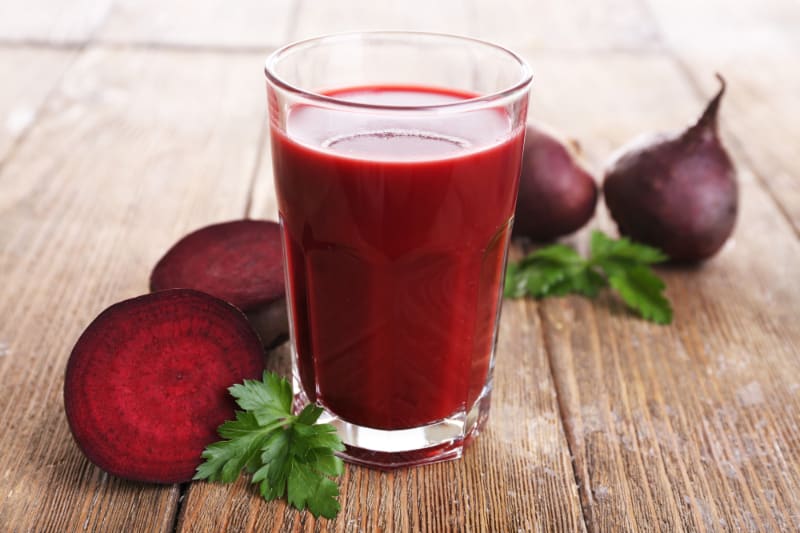
    beet juice in glass on wood table with beets

    But choosing whether to take this superfood at night or in the morning depends on the benefits you are trying to reach.

    Does drinking beet juice before bed help for a detox?

    If you are using beetroot as a detox, some people believe it’s best to detox while your body is at rest. Therefore taking beetroot before going to bed will be the best time to start this process or choosing a specific time of day to detox.

    If you are using beetroot purely for athletic reasons, then you can drink beetroot juice either before or after your workout.

    Before a workout, beetroot juice is known to increase stamina, allowing for a longer workout.

    While after a workout, drinking beetroot juice is a great recovery drink. A study performed by Northumbria University in England, discovered that drinking beet juice can help muscles recover faster than any other food.

    Overall, the benefits of beetroot can help you any time of day.

    Benefits of beetroot include:

    • Includes a natural source of vitamins and minerals including iron, calcium, Vitamin C, Vitamin A, magnesium, potassium, manganese, folate (vitamin B9), zinc, and copper
    • Provides antioxidants that help with anti-inflammatory and detoxification support.
    • High in nitrates which aid in digestion and lower your risk for heart disease. Not the same nitrates in hot dogs and bacon, but a natural source are good for your health.
    • Managing blood pressure (those who are on blood pressure medication should still resume medication)
    • Increased physical performance time
    • May improved blood flow
    • Helps brain function
    • “Phytochemicals give plants their color and also stimulate the immune system, minimize inflammation, and reduce oxidative stress.”-Medical News Today
    • Beetroots are known for their cancer-fighting properties. Because of their antioxidants, they protect our cells from free-radicals. Betanin has been studied for its ability to protect against cancer.
    • Boosts immunity. Vitamin A and Vitamin C are known to affect our body by increasing our immunity.
    • They are good for your liver.
    • They are even good for your eyes.
    • Increases libido. The mineral boron has properties that benefit sex hormone production. A beet here and there may have an effect on erectile dysfunction.

    What You Shouldn’t Eat Or Drink Before Going To Bed

    grayscale photo of sleeping woman lying on bed

    If you’re having trouble sleeping it may be because you’re stressed out or most probably because of what you eat. Most people don’t think what they eat can affect their sleep but it does.

    It may come as a surprise but certain foods can cause you not to fall asleep at night. Taking medication may help but it’s a temporary solution to treating the root cause of the problem.

    Lack of proper sleep can result in weight gain and health deterioration. If you’re irritable, lack concentration, energy, and fatigue you could be suffering from insomnia.

    1.Caffeine Causes People to Have Trouble Sleeping

    Most people are addicted to drinking coffee or tea in the evening before going to sleep which can cause them to have trouble sleeping. Caffeine stays longer in your bloodstream which can interrupt your sleep because it affects your central nervous system.

    If you don’t want to have sleepless nights make sure you don’t take any caffeinated drinks at least eight hours before you sleep. Some people take warm milk to help them sleep at night. It could work for you too.

    2. Avoid Large Meals 3 Hours Before Bed

    You can eat a large meal for lunch but avoid stuffing yourself with food in the evening. This will make you feel uncomfortably full when you go to lay down and you won’t be able to sleep.

    It’s advisable to take your supper 3 hours before you go to sleep and have a light meal that is low in protein and high in carbohydrates.

    3. Limit, Reduce, or Avoid Sugar, Flour, and Other Refined Carbs to Help with Sleep

    Refined carbs are all sugars and starches except those that come from natural foods like fruits. Cereals, sweet yogurt, or orange juice, are refined carbs that most people eat for breakfast which increases your blood sugar levels.

    This affects your appetite, mood, concentration, and energy levels. Processed sugar affects your body. However, eating foods rich in nutrients is known to promote sleep.

    4.Foods to Eat or Drink to Improve Your Quality of Sleep

    Eating or drinking food before is not all bad. Almonds, turkey, chamomile tea, kiwi, tart cherry juice, fatty fish, dairy products, bananas, oatmeal, or walnuts are all approved to improve your quality of sleep according to – Healthline. Healthline studies have found these interesting facts related to sleep and food.

    Add these snacks at night for a way to get a full night’s rest:

    • Almonds: Have melatonin and magnesium which both help with sleep.
    • Turkey: the need for a nap after Thanksgiving is much felt and known for turkey having tryptophan which may induce tiredness.
    • Chamomile tea: contains antioxidants that encourage sleeping.
    • Kiwi: serotonin and antioxidants found in kiwi are both known to improve sleep patterns.
    • Tart cherry juice and walnuts: both have melatonin which aids in sleeping
    • Fish: vitamin D and omega-3 fatty acids found in fish further improve sleep.
    • Dairy products and bananas: well, you may have heard the myth of drinking a warm glass of milk helps you sleep. They are also known to have tryptophan like in turkey.
    • Oatmeal: is known to cause drowsiness so it naturally affects getting a good night’s sleep.
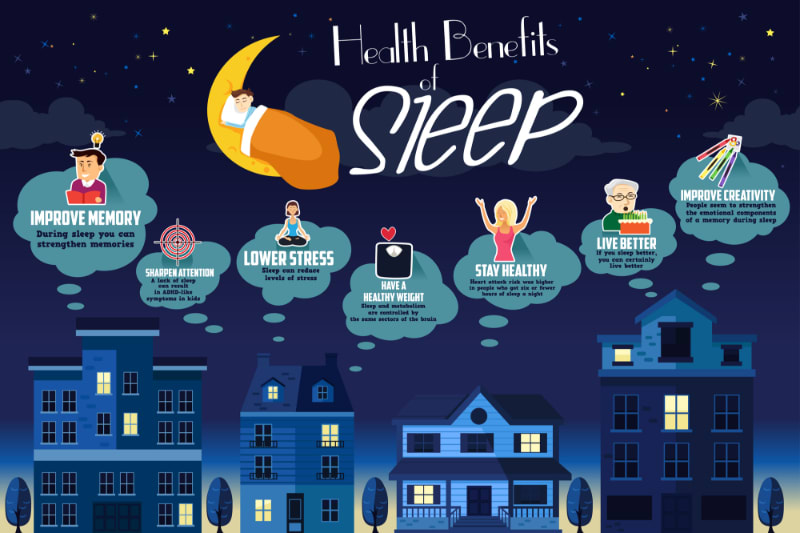
    Health benefits of sleep in a cartoon info-graph

    So if you are having trouble falling asleep, staying asleep, or need to get rested you can try these foods rich in nutrients.

    More Benefits of Beetroot Explained

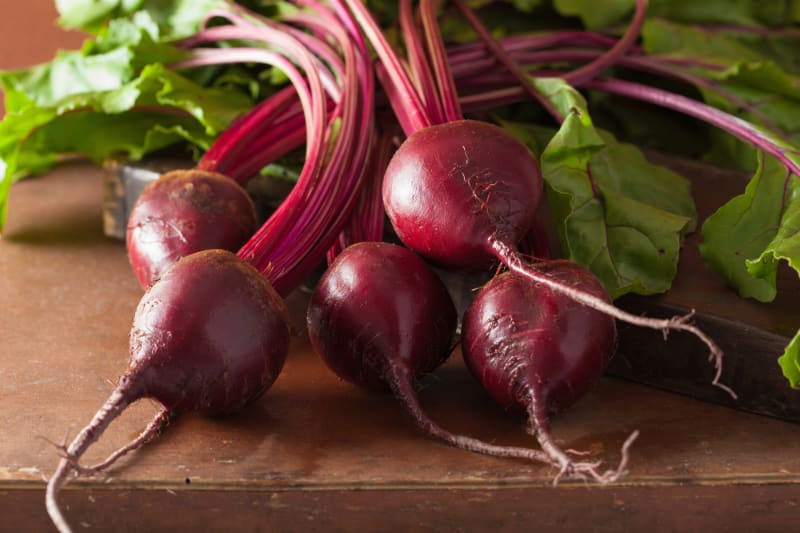
    fresh beetroot on wood table

    Do beets help brain function while sleeping?

    Beetroot is high in nitrates which are converted into nitric oxide which helps to expand your blood vessels, increasing blood flow and oxygen to your body and brain for a better night’s sleep.

    Regular intake of beetroot juice increases oxygen to your brain slowing down diseases like dementia. As you grow older your cognitive functions decrease but beetroot juice helps to improve those functions.

    Beetroot juice contains calcium and magnesium that have a tranquilizing effect so you’re able to sleep better without interruptions.

    Those who consumed the beet juice drink showed improved function in the areas of the brain related to motor control, emotion, and cognition, compared to those in the placebo group.

    How Beetroot Improves Your Exercise Performance

    The nitric oxide in beetroot gives you more energy and stamina to exercise for longer and burn more calories for a healthier body. Exercising regularly in the evening after work can help improve the quality of your sleep. It also improves your respiratory, metabolism, and cardiovascular systems and helps them function properly.

    How Beets Improve Digestion

    Beetroot juice is rich in soluble fibers that promote a healthy digestive tract. With more fiber in your colon, it becomes easier to go to the loo more frequently and remove toxic waste in your body hence preventing constipation and bloating. It’s very hard to sleep if you have a problem with your stomach so a healthy stomach means better sleep.

    Eating enough fiber protects against constipation, hemorrhoids, colon cancer, acid reflux, ulcers, diverticulitis, and obesity.

    Why is beetroot good for sleep?

    Having a good night’s sleep is important for your mental and physical health. When you’re not able to sleep you get moody, anxious, and stressed. Refined sugars, caffeinated drinks, and eating large meals are some of the things that prevent you from having quality sleep.

    Beetroot juice and sleep are related in that beet juice gives you the energy to exercise better and thus sleep better. Also with improved digestion, you don’t get up frequently during the night. Watch this for more information on the benefits of beetroot juice.

    FAQ

    Who should avoid beetroot?

    1.Anyone who has low blood pressure or is taking blood pressure medication should ask a doctor before adding beetroot or beetroot juice to their diet.

    2.Anyone who has a history of kidney stones. Beetroots have high levels of oxalates which can result in kidney stones.

    3.Those who have an allergic reaction to beetroot. Stomach cramps after eating beets may be a sign of an allergic reaction.

    4.Those with stomach issues such as GI disorder.

    5. Be cautious not to eat too much beetroot. Oxalates can cause gouts.

    Is it safe to drink beetroot juice every day?

    Consuming 2 glasses of beetroot juice daily is the recommended amount you can drink. Drinking beet juice gives you the energy to exercise for longer which helps you to sleep better. It’s important for those with low blood pressure will need to monitor their blood pressure if beetroot becomes part of their daily food intake.

    What happens if you eat beetroot juice every day?

    When you include beets in your daily diet you may experience these benefits:

    • controlled blood pressure
    • improved brain function
    • More stamina when exercising
    • may prevent cancer
    • Potassium levels at their best helping you fight fatigue, weakness, and muscle cramps
    • You may notice a boost in your immune system because of the nutritional contents of this superfood
    • Your liver and eyes will thank you
    • helps promote healthy levels of sex hormones.
    • regulated bowel movements decreasing constipation due to beets having high fiber.

    How long does it take a glass of beet juice to lower blood pressure?

    Beets have high levels of natural nitrates. Your digestive system then converts the nitrates into nitric oxide. This allows your blood vessels to relax and widen, which slows blood flow/lowers blood pressure.

    The nitrates in two beets are the same as one glass of beet juice. Once you drink the beet juice your blood pressure drops by 10 mmHg and after 3-6 hours, it drops further.

    Does beet juice make you run faster?

    Studies have shown that beet juice improves your athletic endurance and performance. By boosting your energy levels, you’re able to run faster for a longer period of time. Beet juice also helps to restore your body after an intense or regular workout.

    Can you drink beetroot at night?

    Taking beetroot any time is not a problem, the problem is taking it in excess. It can lead to some serious side effects like kidney stones.

  • 4 Signs That Your Beets Have Gone Bad

    4 Signs That Your Beets Have Gone Bad

    All fresh fruits and veggies have a limited shelf life. To enjoy the health benefits, great taste, and flavor of beets, learn the signs that your beets have gone bad.

    There are 4 ways to know if beets have gone bad: smell, taste, texture, and mold growth. Like most veggies, it can be obvious because of the smell or how they look. Beets are no exception, they are a root vegetable and follow the same guidelines.

    If you’ve been stacking up on your beet supply and aren’t sure of the signs to look out for when they go bad, this post is for you. Use these tips to help keep an eye out and save money with the next beet sale.

    Sometimes your favorite store could have one or two bad beets in the bunch and spoil before the week is over. Beets can also be a great veggie to pick up and have over many days. So, how can one pick the best beets or know when they’ve gone bad?

    Indications beets are not good anymore

    It’s a good idea to look for signs that your beets have gone bad before you buy or even cook them.

    Smell

    Fresh beets have a distinct “earthy” smell when they’re fresh. Although it’s hard to define, an earthy smell can be familiar if you’ve smelled beets in the past. When beets go bad they may not always have a rotten smell but you will notice an unpleasant smell. Trust your excellent smelling skills and your gut.

    If the smell is overbearing, go ahead and throw them away. Sometimes it is hard to base freshness by smell, but in some cases, the smell will be enough.

    The fresh earthy smell is something to grow accustomed to. Beets may not always smell rotten when completely bad, but an unpleasant smell is enough to let that beet go.

    Mold

    People say that if you find mold in your fruits and veggies, you can cut off the moldy parts and use the rest. The problem with this is the fungus hasn’t affected only the parts seen, it has spread its toxins all over the beets.

    The best thing, in this case, would be to through away the whole beet. There is always debate when it comes to foods that have developed some mold. The fungus doesn’t just affect the surface that you see.

    On most occasions, the spores and toxins are all over your vegetable by the time you spot them anywhere.

    Texture

    Fresh beets are very firm but if you notice they have become wrinkly, look for bruising. Beets can get wrinkled because they lack moisture.

    If you notice the coat of the beets has become soft, it’s time to throw them away. Beetroots are very firm when they are fresh – like carrots. I like to compare my beets with my carrots since they are both root vegetables.

    Fresh carrots are firm when fresh and something’s up when they get wrinkly. Check for bruising as well.

    Some wrinkling can be due to lack of moisture, while other wrinkling points to bad beets. Wrinkling = throw them out.

    Beets may have a soft coat, but fresh beets should be as firm as a tennis ball. If the beet is as soft as a tomato, it has likely gone bad.

    Taste

    Sometimes people get the misfortune of a beet going bad early. One might assume it had something to do their storage of the beet.

    A way to test: after a few days of storing in the fridge, take out the bad one and chew on it. If it’s very bitter and dry and nothing like the sweet and mellow taste a good beet should have, it’s bad.

    Warning: that taste can stick around in your mouth and throat for a while. Better for this than to ruin an entire meal though!

    How to select fresh beets

    1. Go for beets with a firm bulb and no signs of bruising. Large beets tend to have a rough texture while small beets are more tender, sweeter, and cook faster.
    2. Look for beets with green leaves. Check for trimmed leaves and grab a few with a 1-2 inch stem.
    3. Avoid beets with soft wet parts or bruises, those beets are spoiled. Beets with an intense color means they have high concentrations of healthy nutrients.

    Know how to spot the best beets

    When you go out to buy beets it’s important to know how to spot the best beets. Also, it helps to know how to best store them so they stay fresh longer. Like other veggies, you can know when they’re spoiled by the smell or how they appear. It’s not always that simple.

    Bottom line: trust your gut if the beets have a funny smell or if you notice any mold or bruising on them.

    How to store beets

    If beets aren’t stored properly, they won’t stay fresh for long. Here are steps to follow to ensure your beets last the longest.

    • Fresh beets with greens attached last for 3-5 days in the refrigerator.
    1. Remove the greens and stems to prevent absorbing moisture from the root. This way the beets can stay fresh in the fridge for 2-4 weeks.
    2. Cut off the stem and leave about 1-inch then place them in an airtight plastic bag.
    3. Don’t wash the beets because water can cause them to go bad.
    4. When cooking beets, don’t peel or cut them before putting them in the fridge.
    5. Once beets get cooked, the skin peels off. And, if you peel them, the color will spill to the boiling water and the beets will turn brown.
    • You can only refrigerate cooked beets for up to 3 days.

    FAQ about bad beets

    Can you eat old beets?

    Fresh beets are supposed to have a hard coat but if yours has a soft coat it is spoiled. Beets can only stay fresh for a few days before they go bad.

    Are slightly moldy beets edible after boiling?

    To be on the safe side its best not to eat beets or any other foods that already have mold because the toxins have spread to the rest of the beets.

    How long do beets stay good in the fridge?

    If your beets have their green attached, cut them off but leave 1-2 inches of the stem. At room temperature, the beets will last a few days but if you want to refrigerate them they will remain fresh for about 10 days.

    Is it bad to eat the skin of a beet?

    If you’re not a fan of the earthy taste of beets then you won’t like how the skin taste because it’s very bitter especially when eating the beets raw.

    Do cooked beets go bad in the fridge faster than other vegetables?

    Cooked beets can only be refrigerated for up to 3 days. You can also freeze cooked beets to keep the flavor and texture.

    What To Look Out For in Unhealthy Beets

    No one likes a bad vegetable. Some smell bad and with others, you’ll only figure out something isn’t right when you’ve already cooked them. Imagine having guests over and realizing you have to cook all over again. It would be even worse if you learn much later after your guests complain of stomach upsets!

    Beetroots are pretty hardy when fresh. Most root vegetables can go for a month without spoiling as long as they’re stored in the best conditions: humid and cool.

    This is why you have a veggie drawer in your fridge; it can stay cool during summer, and not too icy when it’s winter.

    Conclusion

    There is no harm in trying to save a few pennies and making a beet last longer. But, there is no point in getting sick over a few bad beets.

    Buy your beets from a trusted source and don’t forget to store them well!

  • Beets & Bowels: Can Beets Cause Diarrhea?

    Beets & Bowels: Can Beets Cause Diarrhea?

    Detoxes are typically not rosy for the first few days. One is bound to experience digestive issues. When it comes to beets and diarrhea, stakes tend to be higher because of the stool color.

    Yes, beets can cause diarrhea. Eating many beets or while on a detox can make loose stools in some people. People who have irritable bowel syndrome may be more prone to diarrhea while eating beets as they are high in fiber.

    Eating these red vegetables are not always smooth sailing for some. In other cases having beets be part of your every day routine can benefit your life.

    Typically there are two extremes; panic from what they discover and visit a doctor only to find out all is well, or they might ignore severe symptoms.

    Read about what to expect when taking this pretty vegetable for the first time and more on bowel-related issues.

    Are Beets Diarrhea Prone?

    The runs are more common to many who eat beets and are not used to a high fiber diet. Beets get a bad rep because they contain high fiber like other food which can lead to runny stools in some people.

    Can beets cause constipation?

    For your health, a nutritionist may ask you to do a beet test since a beet can turn stools red. The beet test is used to find out how long it takes your food to get from one end to the other. If you do not see any red in your stool within 24 hours, it’s taking too long for your stomach to digest wastes.

    Low stomach acid can make it hard to digest or absorb nutrients which can make you constipated. The effects of beet juice can help regulate your digestive system.

    Read here about the beet test.

    Do beets cause diarrhea?

    When starting a detox through any vegetable or fruit regiment/juicing, two things are likely to happen.

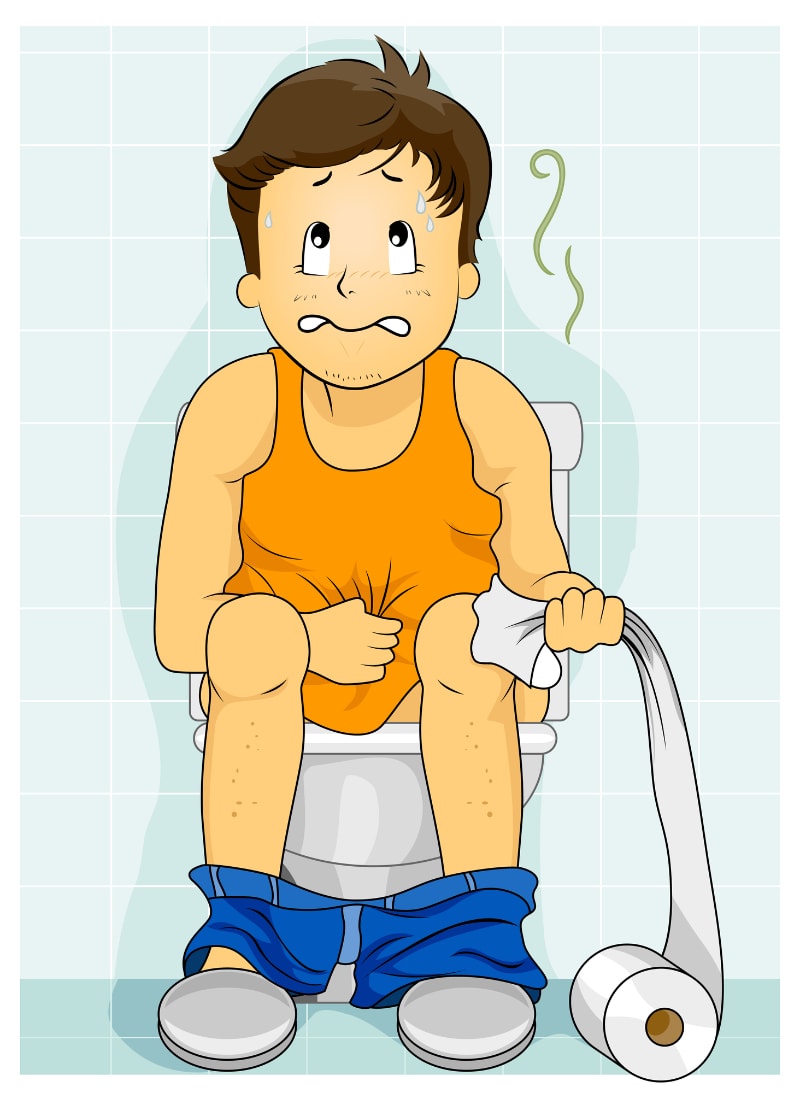
    man on toilet with toilet paper grabbing shirt

    You either get runny stools or become constipated. This happens because the digestive system is working hard to rid the body of toxins which is good for your overall health. Since it occurs unexpectedly, your system goes into upheaval. Gastrointestinal discomfort and other symptoms usually follow.

    When you first eat raw beets or any food as part of a health change, it can result in your system going through a detoxification process. The same is true with taking beet juice. What’s more, the color of your stool may change. This is known as beeturia. However, that happens to only about 10 percent of the population.

    Overall, if you are sensitive, your bowel movements will change, and you will experience some gastrointestinal discomfort too.

    Do beets make your poop or urine red?

    When you do get beets diarrhea-related concerns, you will find that stools turns red. That is utterly frightening for anyone unaware of the connection. The first instinct might be to believe that there is internal blood coming out in your stools and you need medical attention.

    Yes, these pretty red vegetables can turn your stool red.

    We find that for some the red color clears after a few days, along with loose stools. If it, however, goes on for long, you should visit your doctor to eliminate other possibilities. It would be unfortunate and even dangerous if the color were indeed blood, but you were attributing it to beeturia. Pain and other abnormal signs are indicators of a severe issue.

    If your urine is pink or red it could be a sign of beeturia. Drinking more water can help flush the pigment out sooner.

    The stool or urine may turn red when the red-purplish pigment doesn’t get absorbed in the body. That ought to take place in the colon, but when there is high oxalic acid, the body is unable to absorb minerals, the beetroot’s betalain pigment included. When the colon is functioning well, the decolonization pigment should take place in the colon.

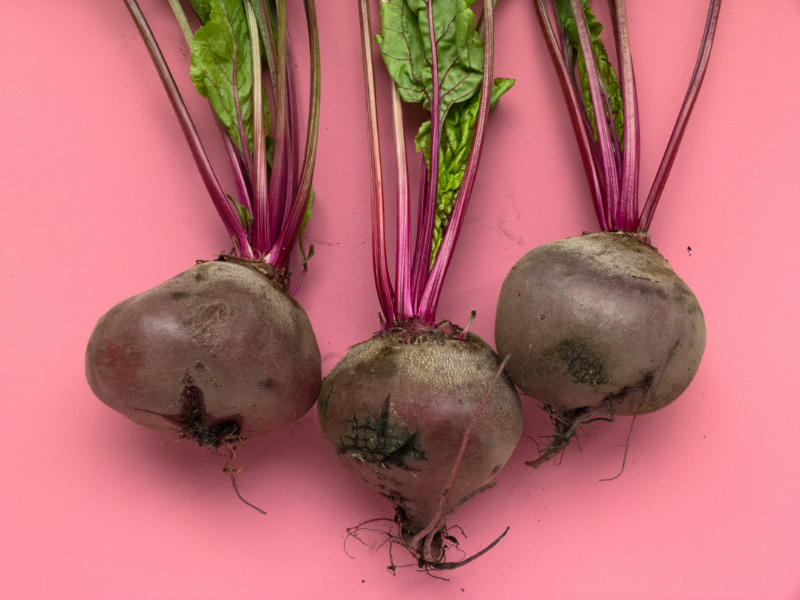
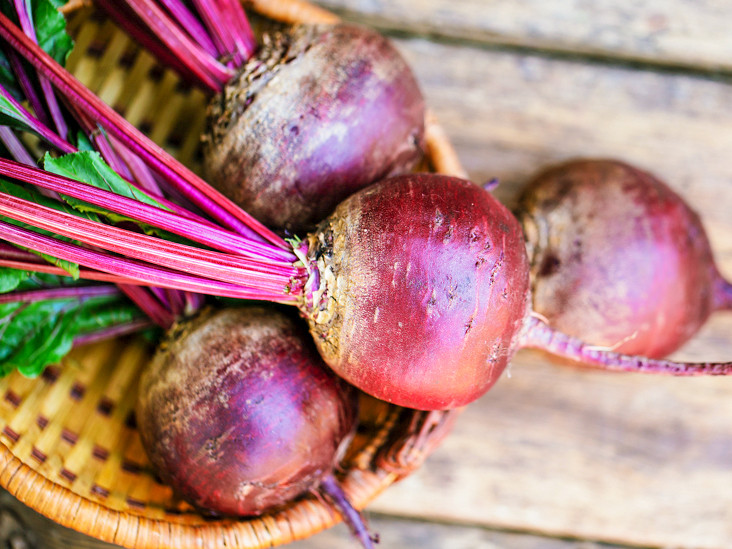
    beets on a table - do beets cause diarrhea article
    beets laying on a table freshly pulled from garden

    Digestive Concerns about Beets and a Bowel Movement

    If you have irritable bowel syndrome or generally a sensitive gastrointestinal system, then you are likely to experience a heightened level of discomfort than the average person.

    The side effect of flatulence, bloating, cramping or abdominal pain will be some things that you encounter. I recommend that you start with a quarter cup serving. Once you are acclimated, continue adding small portions gradually. A cup a day is typically enough to rip the benefits of beets.

    For some people, it is not that straightforward. For them, it could be a case of food sensitivity or an allergy. If even after taking a small number of beets for a few days you experience discomfort, it is likely that you have sensitivity.

    If you are allergic, the symptoms are more pronounced, but they are extremely rare. Either way, you should stop consuming beets and visit your doctor.

    Consuming Beet Juice and Symptoms

    If that is happening, you are likely taking beet juice or beet salads because you are looking to have positive side effects for your digestive system and become a healthier you.

    beet juice in a glass - do beets cause diarrhea article
    beets and vegetable smoothie in glass

    Generally, it should not be a reason for concern. It only ought to be if it is prolonged and you have previous stomach issues.

    How long does poop stay red after eating beets?

    Most likely it will take 1-3 days for your poop to turn normal. It all depends on how long it takes for food to get out of your system. The effects of the consumption of a beet here are there results in a healthy outcome for most.

    How long does it take the beets to pass?

    Beets can pass in stool or urine and the time varies depending on the condition of the digestive system. For a healthy person, the average time is between 18 to 24 hours. The time is shorter for others, if constipated.

    Are beets a natural laxative?

    The cleansing power of the food, beetroot can lead one to presume that beets are a laxative. It only acts as one when you start taking them. As your body adjusts to high fiber content every day, your stools can turn regular.

    So can beetroot result in loose stools?

    Yes, the effect of high fiber can cause loose stools.

    Is a bloody poop from beetroot an emergency?

    If after taking beets your diarrhea is red, then there is no reason for concern as you could be having beeturia, which is harmless. Relax, it probably isn’t blood. However, if you were having red bowels before taking beets for a prolonged period, then you ought to seek immediate medical attention and consult your doctor.

    Are beets good for your digestive system?

    On average, the fiber in raw beets does make it a fantastic digestive companion. Having beetroots is also linked with the lowering of one’s risk of getting diverticular disease (small budges appearing on the digestive tract) and colon cancer. It is also ideal because the fiber in the beets promotes regular bowel movements.